At-Home Dermaplaning: What a Face Razor Does and When to Skip It
SkinArticleFacial razors promise smoother makeup and no more peach fuzz. Hair won't grow back thicker, but skin conditions and sudden new hair change the picture.
In this article
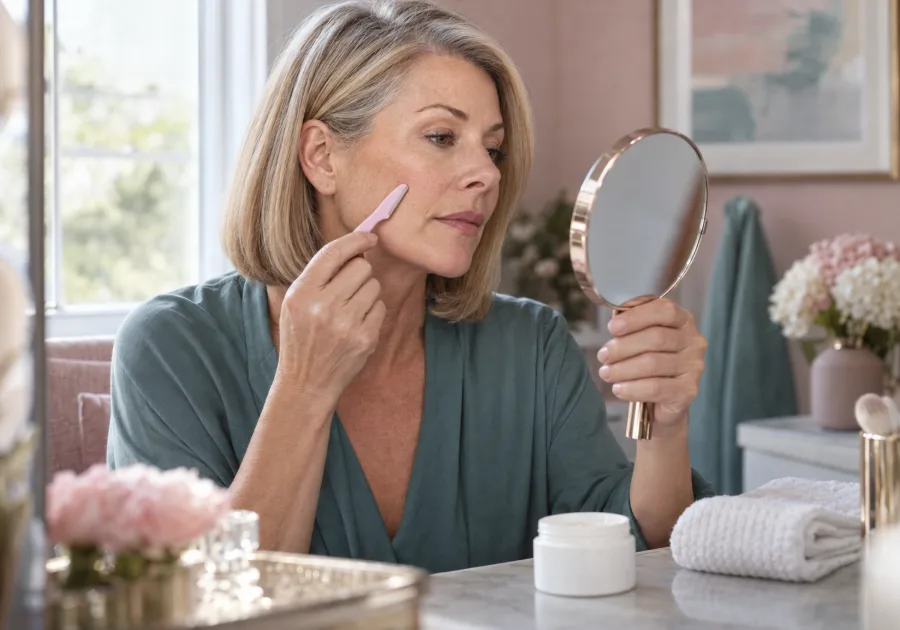
Facial razors, often sold in pastel multipacks as “dermaplaning tools,” are an inexpensive way to remove peach fuzz and smooth the surface before makeup. Many women find more facial hair after menopause. Here is what a face razor does, the myth to set aside, and the situations where you should put it down.
What it does
In a clinic, dermaplaning uses a special instrument to shave away the uppermost layer of skin.1 At home, a small single-blade facial razor does a lighter version: it removes fine hair and some surface flakes.
The myth: it makes hair grow back thicker
Cleveland Clinic2 says shaving won’t make hair grow back thicker or faster. Freshly cut hairs feel coarser because their blunt ends are thicker than the tapered tip, and they return to their usual texture as they grow out.2
When to skip it
Cleveland Clinic1 advises talking with your provider before dermaplaning if you have active acne, cold sores, eczema, psoriasis, recent burns, contact dermatitis, or moles or skin tags in the area.1 The AAD warns never to shave over acne, which can make it worse.3 Possible problems include infection, scarring and changes in skin color.1
Go around raised spots and moles rather than over them.
How to do it more safely
The AAD’s shaving advice applies to the face too:3
- Start with clean, damp skin. Wet skin and hair to soften it first.
- Go with the grain. Shave in the direction the hair grows.
- Use a light touch to avoid nicks.
- Replace the blade often. The AAD suggests a new blade or disposable razor after 5 to 7 shaves.
- Store it dry, away from the shower or a wet sink.
Keep your face razor for your face only, and don’t share it.
When new hair needs a doctor
The NHS4 notes that many women get more of this type of hair as they get older, particularly after menopause. It advises an urgent appointment if new thick, dark hair suddenly starts growing on your face and body along with a deeper voice or more muscle.4 A prescription cream can slow facial hair growth for some women.4
Our article on chin hairs explains common causes and what to ask.
Try: “I’ve noticed more dark facial hair over the past few months. Is this normal for my age, or should we check my hormones?”
Skin, Head to Toe includes a short-shelf planner. Use it to keep your face routine simple and note any changes in hair or skin to bring to your next visit. See the book.
This article is for general educational purposes only and is not medical advice. It isn't a substitute for diagnosis or treatment from a qualified healthcare professional who knows your health history. Please don't ignore professional advice or delay getting care because of something you read here. If you think you may be having a medical emergency, call 911 or your local emergency number right away. Girl Playbook does not endorse any specific product, test, or provider.
Girl Playbook sells this book. It provides education and worksheets, not individualized medical care.
Sources
The research behind this article, in the order it’s cited. How we source our articles.
- Cleveland ClinicDermaplaning: What It Is, Benefits & Side Effects (opens in a new tab)abcd
- Cleveland ClinicWill Shaving Make Your Hair Grow Back Thicker? (opens in a new tab)ab
- American Academy of DermatologyHair removal: How to shave (opens in a new tab)ab
- NHSExcessive hair growth (hirsutism) (opens in a new tab)abc
Spotted something out of date? Tell us and we’ll check it.


