A Base Tan Does Not Prevent Sunburn
SkinArticleThe documented tanning-bed claim, what UV-induced colour means and how to plan an outdoor day.
In this article
An indoor “base tan” does not prevent sunburn. The CDC1 describes it as a sign of skin damage. Getting colour before a holiday does not replace a sun-protection plan.1
What the colour actually tells you
UV exposure prompts the skin to make more melanin, the pigment responsible for skin colour. A tan or burn after that exposure indicates injury. Indoor tanning exposes skin to intense UV radiation, a known cause of cancer, and can cause serious burns.1
If you have booked a session as part of preparing for a trip, reconsider that appointment. Put the outdoor plan in place before you travel: where you will find shade, what clothing you will take and which sunscreen directions you need to read.
Cloud cover does not settle the question
UV rays can reach skin on cloudy or cool days and reflect from water, sand, snow and other surfaces. The CDC1 recommends protection throughout the year, with several protective measures when the local UV index is three or higher.1
Check the local forecast when arranging an outdoor day. Think through the time you will spend waiting, walking or sitting as well as the main activity. If the plan offers little shade, decide what you can change before you leave home.
Build protection around the day you will have
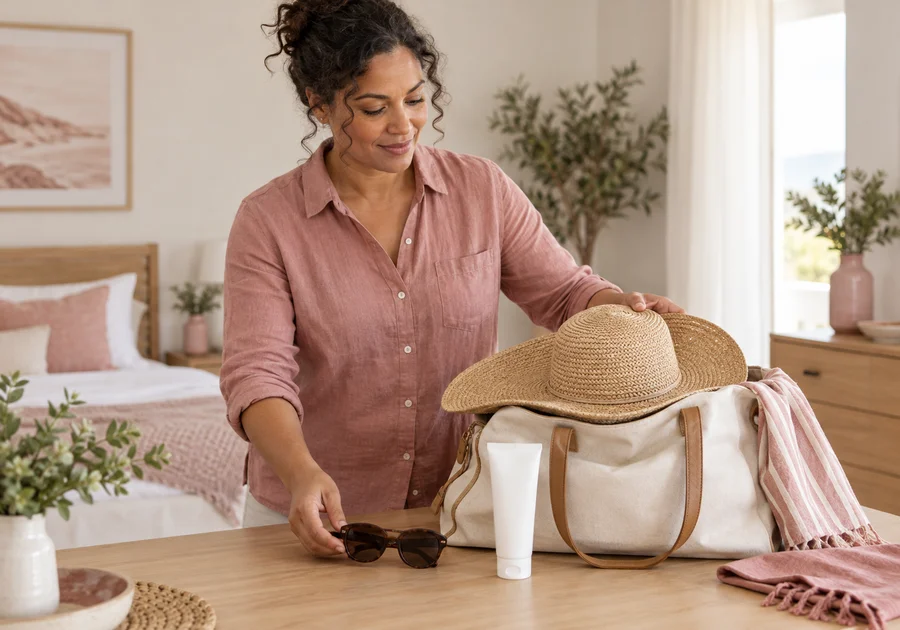
The CDC’s1 measures include shade, clothing covering the arms and legs, a wide-brimmed hat, UV-blocking sunglasses and broad-spectrum sunscreen.1
Read the sunscreen label for application and reapplication directions. Pack enough for the outing and put it where you can reach it. Choose clothing and a hat you can use during the activity, rather than counting on items that stay in the bag.
If a skin condition, a medicine or a previous reaction makes the plan uncertain, ask a clinician or pharmacist for advice. Take the product names and describe the circumstances you are planning for. Ask for instructions you can follow at the beach, on a walking route or during an outdoor workday.
Skin, Head to Toe includes a label decoder and a short-shelf planner. Use them to organize product questions and the items you intend to use. See the book.
This article is for general educational purposes only and is not medical advice. It isn't a substitute for diagnosis or treatment from a qualified healthcare professional who knows your health history. Please don't ignore professional advice or delay getting care because of something you read here. If you think you may be having a medical emergency, call 911 or your local emergency number right away. Girl Playbook does not endorse any specific product, test, or provider.
Girl Playbook sells this book. It provides education and worksheets, not individualized medical care.
Sources
The research behind this article, in the order it’s cited. How we source our articles.
- Centers for Disease Control and Prevention, 2026Reducing Risk for Skin Cancer (opens in a new tab)abcdefghi
Spotted something out of date? Tell us and we’ll check it.


