Calcium Pills vs. Calcium From Food: What It Means for Kidney Stones
Bladder & Pelvic FloorArticleMany women cut dairy after a kidney stone or take calcium pills for their bones without thinking about stones. In a study of more than 90,000 women, calcium from food was linked to fewer stones while calcium supplements were linked to more. A large trial in postmenopausal women found calcium plus vitamin D pills raised kidney stone risk.
In this article
Cutting calcium can seem like a logical way to avoid kidney stones. Research in women points the other way for food calcium, while pills are a different story.
Food calcium vs. supplements
The Nurses’ Health Study followed more than 91,000 women for 12 years.1
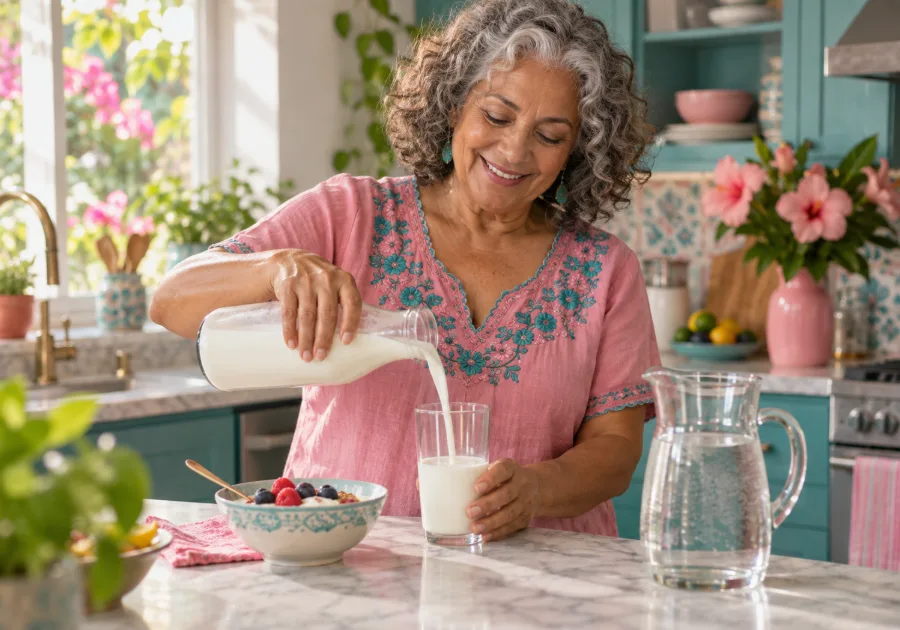
- Women who got the most calcium from food had about 35% lower stone risk than those who got the least.1
- Women taking calcium supplements had about 20% higher risk than those who didn’t.1
Why the difference? Calcium in a meal binds oxalate in the gut, so less oxalate reaches the urine.1 Two-thirds of supplement users took their pills between meals or with low-oxalate meals, which could explain part of it.1 The authors also noted other dairy components might play a role.1
The postmenopausal trial
In the Women’s Health Initiative, about 36,000 postmenopausal women took 1,000 mg of calcium carbonate with 400 IU of vitamin D daily, or placebo, for about 7 years.2 Supplements didn’t significantly reduce hip fractures and raised kidney stone risk by about 17%.2 Our guide to calcium and vitamin D supplements after menopause covers the bone side.
Other diet factors in the same study
Compared with women at the low end, women at the high end of intake had:1
- More fluid: about 39% lower risk
- More potassium (fruits, vegetables): about 35% lower risk
- More sugar: about 52% higher risk
- More sodium: about 30% higher risk
What this means for you
- Don’t cut dairy or calcium-rich foods on your own after a stone; ask first.
- If you need a supplement, ask whether to take it with meals.
- Drink enough fluid and watch salt and sugar.
- Find out what your stone was made of. Our article on stone analysis vs. 24-hour urine explains the tests.
Our guides to blood in the urine and strong-smelling urine cover related symptoms.
Try: “I had a calcium stone last year and I take a calcium pill for my bones. Should I change how or when I take it, or get more calcium from food instead?”
Laugh, Sneeze, Jump includes an appointment prep sheet. Use it to list your supplements, daily fluid intake and stone history before your visit.
This article is for general educational purposes only and is not medical advice. It isn't a substitute for diagnosis or treatment from a qualified healthcare professional who knows your health history. Please don't stop a calcium supplement prescribed for osteoporosis without talking to your clinician. Severe side or back pain, blood in the urine, fever with urinary symptoms, or vomiting with pain need prompt medical care. If you think you may be having a medical emergency, call 911 or your local emergency number right away. This article discusses published research. Girl Playbook does not endorse any specific product, test, or provider.
Girl Playbook sells this book. It provides education and worksheets, not individualized medical care.
Sources
The research behind this article, in the order it’s cited. How we source our articles.
- Annals of Internal Medicine (abstract via PubMed), 1997Comparison of dietary calcium with supplemental calcium and other nutrients as factors affecting the risk for kidney stones in women (opens in a new tab)abcdefg
- New England Journal of Medicine (abstract via PubMed), 2006Calcium plus vitamin D supplementation and the risk of fractures (opens in a new tab)ab
Spotted something out of date? Tell us and we’ll check it.


