Can Women Have Sleep Apnea Without Snoring?
Sleep & NighttimeArticleWhy sleep apnea in women often shows up as tiredness, morning headaches and insomnia instead of loud snoring, why menopause hides it, and who to ask about a sleep study.
In this article
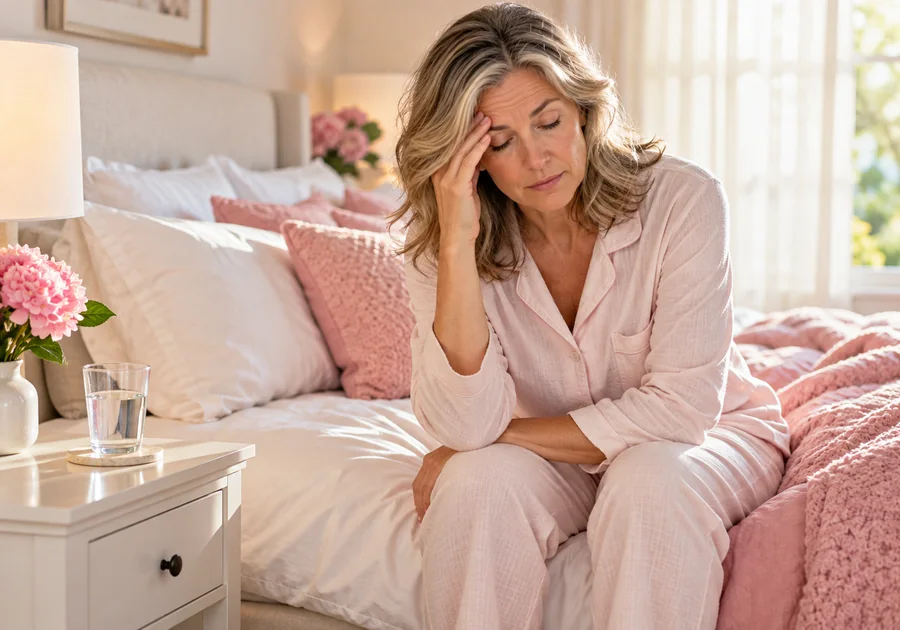
You sleep eight hours and wake up flattened. There’s a headache behind your eyes before the coffee is even made. By 2 p.m. you’re reading the same email for the third time. Your partner has never mentioned snoring, so sleep apnea never crosses your mind. You’ve blamed work, your age, your mood and menopause.
What sleep apnea is
The NHLBI1 describes it as breathing that starts and stops many times while you sleep. The NHS2 lists gasping, snorting or choking noises, and heavy tiredness and trouble concentrating the next day.
A bed partner is often the first to notice the pauses, the NHLBI1 says. If you sleep alone, or your partner sleeps like a stone, the pauses go uncounted.
Why it gets missed in women
The overlap is the problem. Look at that symptom list again. Insomnia, headaches, anxiety, fatigue and low mood are also what menopause, stress and 3 a.m. wake-ups look like. The NHLBI3 says menopause symptoms such as insomnia and fatigue can mask sleep apnea.
It also says the risk rises during and after menopause, and during pregnancy, with hormonal changes and weight gain playing a part. It says women with PCOS are at higher risk, and that in pregnancy it can be more serious in the third trimester. Our article on PCOS covers that condition.
The NHS2 lists other risk factors: obesity, getting older, drinking alcohol, smoking and sleeping on your back.
Other clues
The NHLBI1 also lists dry mouth, headaches, sexual dysfunction and waking frequently at night to urinate. If you wake to pee several times a night, that article covers bladder causes too, and it’s worth mentioning both to your clinician. See also waking with a dry mouth and snoring.
How it’s found
The NHLBI1 says a provider may order a sleep study. The NHS2 suggests bringing a partner to the appointment if one has noticed symptoms.
What helps
The NHLBI4 says PAP machines are the most common treatment, usually CPAP, which delivers constant air pressure through a mask. The NHS2 describes a CPAP machine as pumping air gently into a mask over your nose, and says the NHS provides them free of charge.
The NHLBI4 also lists custom-fitted oral devices that move the jaw or hold the tongue forward, mouth and facial muscle exercises, and surgical options including hypoglossal nerve stimulation. It says to ask your provider which fits you.
Lifestyle changes are on every list. The NHLBI4 names regular physical activity, a healthy weight, limiting alcohol and caffeine, quitting smoking and sleeping on your side. The NHS2 says not to take sleeping pills unless a doctor recommends them.
Try this: a two-week sleep log
For two weeks, write down what time you went to bed, what time you woke, how many times you woke and how you felt on getting up.
Add any headache, dry mouth or bathroom visit.
If you share a bed, ask your partner to note any pauses, gasps or choking sounds. Bring all of it to your appointment.
When to get checked
The NHLBI1 says to talk to your healthcare provider if you have symptoms or risk factors. The NHS2 says to see a doctor if your breathing pauses and restarts in your sleep or you always feel exhausted in the day.
Book an appointment if any of these fit:
- You wake tired after a full night, most mornings
- Morning headaches are a pattern
- Your partner has seen you pause for breath, gasp or choke
- You’ve been told it’s menopause or stress, and sleep hasn’t improved
- You’re pregnant, or you have PCOS, and your sleep has gotten worse
Tiredness has a lot of possible explanations. This one has a test and a treatment, and a woman who doesn’t snore can still have it.
Do not take sleeping pills to treat tiredness that may come from sleep apnea unless a doctor recommends them.
This article is for general educational purposes only and is not medical advice. It isn't a substitute for diagnosis or treatment from a qualified healthcare professional who knows your health history. Please don't ignore professional advice or delay getting care because of something you read here. If you think you may be having a medical emergency, call 911 or your local emergency number right away. Girl Playbook does not endorse any specific product, test, or provider.
Girl Playbook sells this book. It provides education and worksheets, not individualized medical care.
Sources
The research behind this article, in the order it’s cited. How we source our articles.
- National Heart, Lung, and Blood Institute (NHLBI)Sleep Apnea: Signs and Symptoms (opens in a new tab)abcdef
- NHSSleep apnoea (opens in a new tab)abcdef
- NHLBISleep Apnea and Women (opens in a new tab)↩
- NHLBISleep Apnea: Treatment (opens in a new tab)abc
Spotted something out of date? Tell us and we’ll check it.


