Checking the Clock at Night?What Clock-Watching Studies Show
Sleep & NighttimeArticleChecking the time when you can't sleep feels harmless, but experiments suggest it isn't. In London studies, people told to watch a clock while falling asleep worried more and took longer to drop off, whether they were good sleepers or had insomnia. In a US sleep center, clock-watching went with worse insomnia and more sleep aid use. Here is what the research shows and what to do instead.
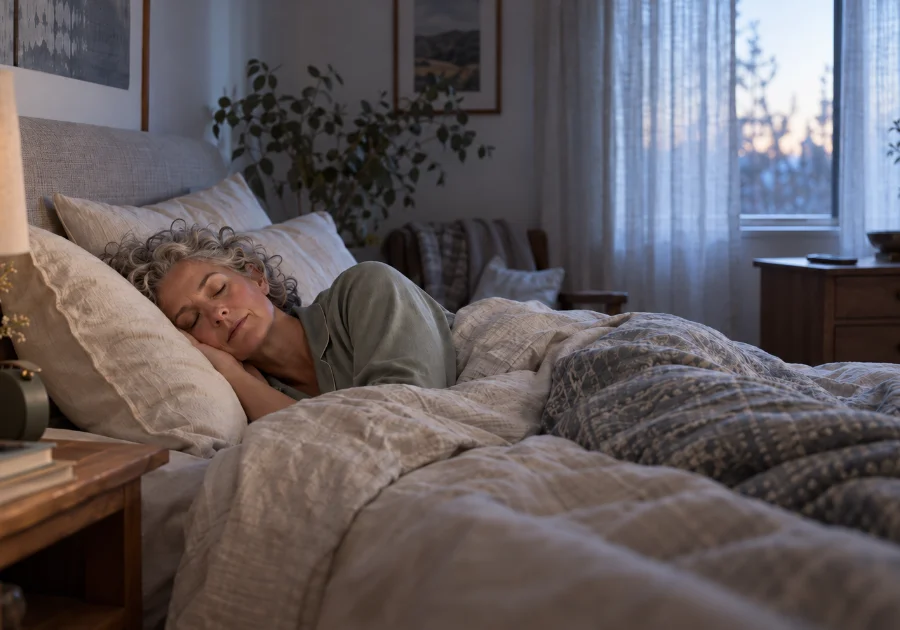
You wake at night, roll over and check the time. 2:47. Then 3:15. Then 3:40, and now you’re counting the hours until the alarm. Researchers have tested whether that habit makes sleep harder.
The clock experiments
Researchers in London ran two experiments.1
Experiment 1. 30 good sleepers and 30 poor sleepers were told either to watch a clock or not to watch it while trying to fall asleep.1 Sleep was tracked with their own reports and a wrist motion sensor.1
- Clock-watchers worried more before sleep.1
- They took longer to fall asleep.1
- This was true for good and poor sleepers alike.1
Experiment 2. 38 people with insomnia watched either a clock or a digit display used as a comparison task.1
- Clock-watchers worried more and reported taking longer to fall asleep than on their usual night.1
- They also overestimated how long it took them to fall asleep, more than the comparison group.1
The authors suggested watching the clock may keep insomnia going by feeding worry and making a bad night seem longer than it was.1
In a sleep clinic
A US sleep center looked at questionnaires from 4,886 patients.2 People who watched the clock more, and felt more frustrated by it, tended to have worse insomnia, and worse insomnia went with more use of sleep aids.2 It was a snapshot, so the direction isn’t certain, and the authors called for trials testing whether cutting back on clock-watching helps.2
What to do instead
- Turn the clock away from the bed, or put it where you can’t see it.
- Keep your phone out of reach, so checking the time doesn’t turn into scrolling. UK advice is to avoid phones and screens right before bed.3
- Get up at the same time every day, even after a bad night, rather than sleeping in.3
- Go to bed when you’re sleepy, not just because it’s time.3
- Record your night in the morning, roughly, rather than tracking it minute by minute.
See why you wake at 3 a.m. and what CBT for insomnia involves.
When to get help
See a GP if changing your habits hasn’t helped, you’ve slept badly for months, or poor sleep is making daily life hard to cope with.3
Try: “I’ve had trouble sleeping for months, and I check the clock every time I wake up. Could I get a referral for CBT for insomnia?”
Did I Do That in My Sleep? covers this in Chapter 10, “In Bed All Night, Tired All Day,” in a section called “What CBT-I Actually Addresses.” Its 14-Night Lights-Out Record asks for an approximate morning account, not a minute-by-minute scorecard, so you can track your nights without watching the clock. See the book.
This article is for general educational purposes only and is not medical advice. It isn't a substitute for diagnosis or treatment from a qualified healthcare professional who knows your health history. See a doctor if poor sleep has lasted months, is affecting your daily life, or comes with loud snoring, gasping, leg discomfort or low mood. Girl Playbook does not endorse any specific product, test, or provider.
Girl Playbook sells this book. It provides education and worksheets, not individualized medical care.
Sources
The research behind this article, in the order it’s cited. How we source our articles.
- Journal of Behavior Therapy and Experimental Psychiatry (abstract via PubMed), 2007Sleeping with the enemy: clock monitoring in the maintenance of insomnia (opens in a new tab)abcdefghij
- Primary Care Companion for CNS Disorders (abstract via PubMed), 2023Use of Sleep Aids in Insomnia: The Role of Time Monitoring Behavior (opens in a new tab)abc
- NHS, 2026Insomnia (opens in a new tab)abcd
Spotted something out of date? Tell us and we’ll check it.


