Essential Oils for Alopecia Areata: A 1998 Trial
HairArticleThe blend study has conflicting denominators and a later allocation clarification.
In this article
What was tested
A 1998 alopecia areata study assigned 84 people, after excluding two with androgenic alopecia from 86 invited. Thyme, lavender, rosemary and cedarwood in jojoba/grapeseed oils were compared with carriers alone; both groups massaged nightly for seven months.1
A later author reply described alternating allocation, rather than chance assignment. Smells differed, potentially revealing treatment despite blinded photograph assessors.12
Follow the denominators
Blend/carrier counts: 43/41 assigned; 35/28 completed; 19/6 improved. The abstract uses assigned denominators, but Table 2 totals 63 completers. Missing-outcome handling is unclear. Improvement included 10–30% regrowth, not necessarily complete recovery. Soropotomists International of Aberdeen funded the trial.1
Read the product claim
The FDA3 explains that a product’s intended use determines how it is regulated. A massage oil advertised to treat a disease makes a drug claim; being made from plants does not exempt it from drug requirements. Cosmetics generally do not need FDA approval before sale. A cosmetic on a shelf should therefore not be assumed to have undergone drug approval.3
The FDA3 also warns that plant ingredients can irritate skin or cause allergic reactions. “Natural” and “organic” do not establish safety. Bring the complete ingredient list and the label’s promised use to your dermatologist rather than treating those words as evidence that an oil suits your scalp.3
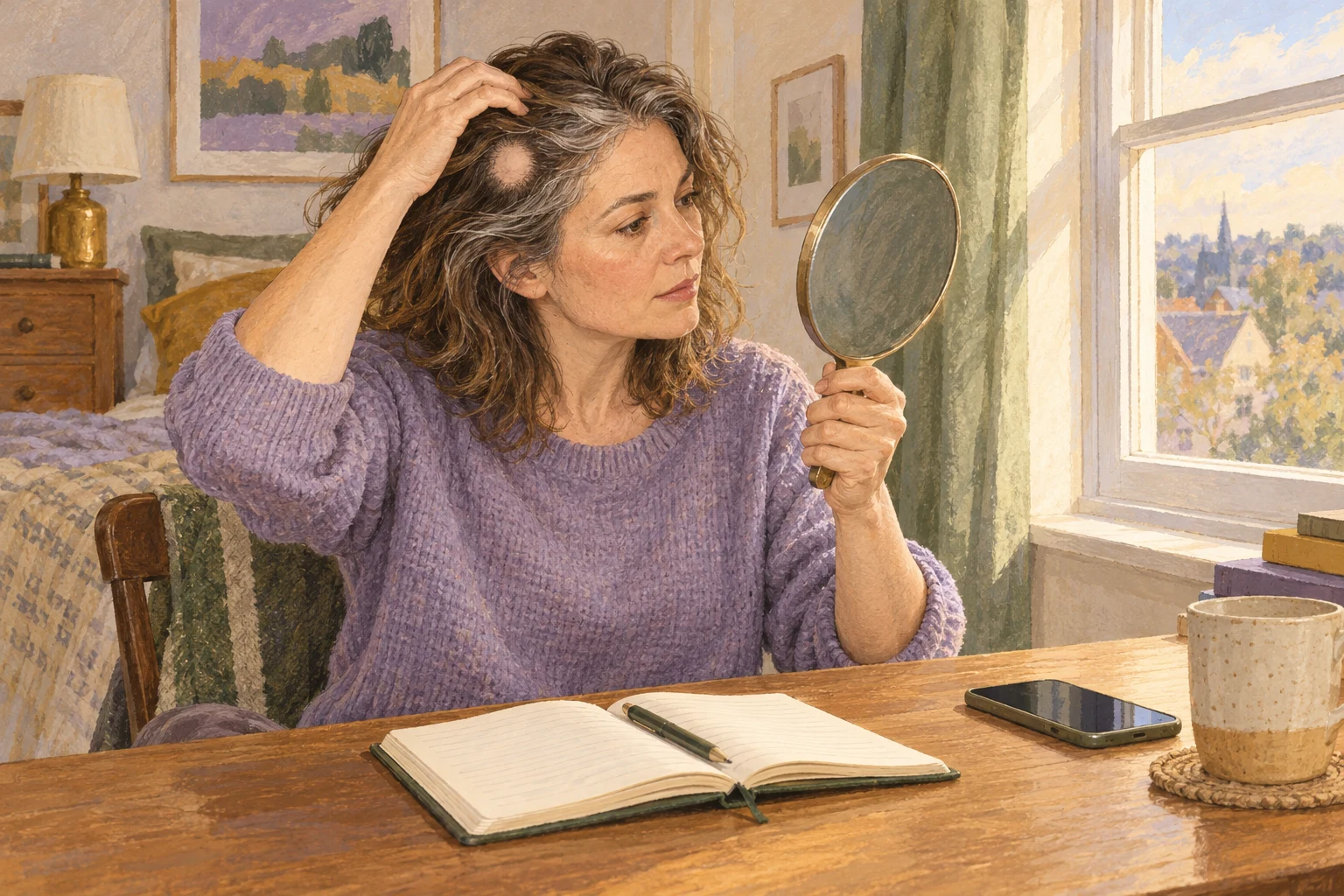
Bring the patch to an appointment
The American Academy of Dermatology4 describes assessment of the scalp and nails, family history, and sometimes additional testing before confirming alopecia areata. Treatment depends on the amount, location and duration of hair loss, as well as age. Corticosteroid injections or topical corticosteroids are among options for patchy disease.4
A few patches present for less than a year may regrow without treatment; a dermatologist may recommend observation. Ask what changes should prompt reassessment and when the next visit should be. Spontaneous regrowth makes an individual’s improvement after starting a product difficult to attribute to that product.4
Hair, Everywhere includes “Your Hair Log”: record products with start dates and take monthly photographs using consistent light, distance and positioning. Bring those dated notes to the appointment so the dermatologist can see the sequence of changes.
Educational information. Discuss scalp treatments with your dermatologist.
Girl Playbook sells this book. It provides education and worksheets, not individualized medical care.
Sources
The research behind this article, in the order it’s cited. How we source our articles.
- Archives of Dermatology, 1998Hay aromatherapy trial (opens in a new tab)abc
- Archives of Dermatology, 1999Hay author reply (opens in a new tab)↩
- FDAAromatherapy (opens in a new tab)abcd
- American Academy of Dermatology, October 2026Alopecia areata diagnosis and treatment (opens in a new tab)abc
Spotted something out of date? Tell us and we’ll check it.