Avoiding Water Before Exercise?3 Checks for a Bladder Plan
Bladder & Pelvic FloorArticleBring the skipped drinks into the conversation about leaks.
In this article
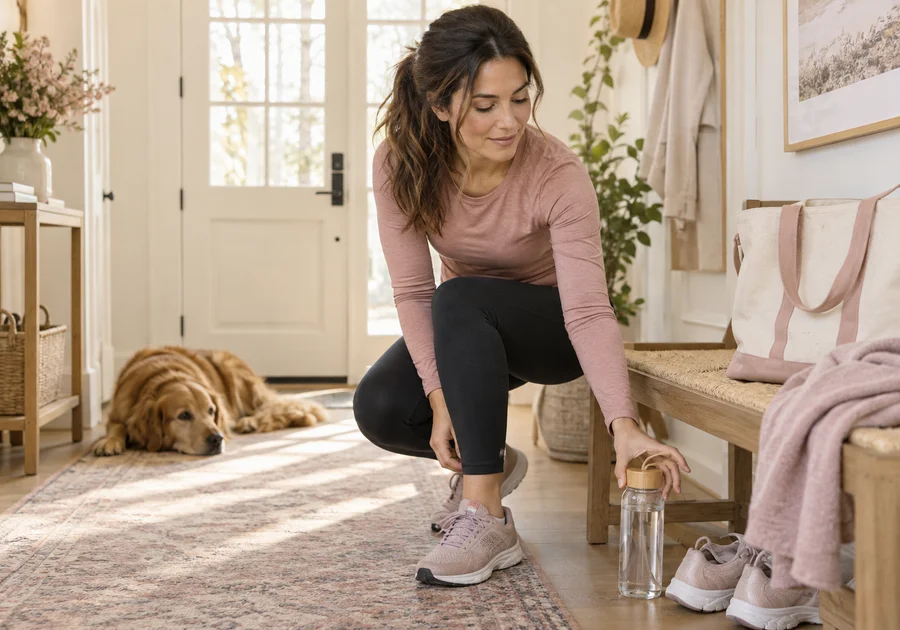
If your walking bag has spare underwear but no water bottle, the effort to avoid another leak deserves a place in your care appointment. Tell the clinician what you have started avoiding, including drinks and activities.
Three checks before cutting back further
- Have you been given an individual fluid target? Bring any existing fluid restriction from another clinician. Ask how it applies on active days or in hot weather, and who should resolve conflicting instructions. Fluid advice should account for your health and circumstances.1
- Have you separated the drinks from the total amount? Caffeine can irritate the bladder, and alcohol increases urine production. A clinician may suggest avoiding them to see whether leaks improve. Ask which change to try instead of removing every drink from your routine.1
- Have you asked about the leaks themselves? Pelvic floor exercises, bladder training and other treatments may be part of care. Ask which approach fits your symptoms and how to review progress.1
Describe the decision you make before leaving home
Write down the activity, what you drank, when you drank it and when the leak happened. Include the drink you would have had if you were less worried. You can bring that account alongside any diary the service requests.
A useful opening is: “I want to keep doing this activity. I’ve started avoiding drinks because I’m afraid of leaking. Can we make a plan for both?” That gives the appointment a practical goal.
Laugh, Sneeze, Jump includes a three-day bladder log and an appointment prep sheet. Use them to organize the observations and questions you want to bring. See the book.
This article is for general educational purposes only and is not medical advice. It isn't a substitute for diagnosis or treatment from a qualified healthcare professional who knows your health history. Please don't ignore professional advice or delay getting care because of something you read here. If you think you may be having a medical emergency, call 911 or your local emergency number right away. Girl Playbook does not endorse any specific product, test, or provider.
Girl Playbook sells this book. It provides education and worksheets, not individualized medical care.
Sources
The research behind this article, in the order it’s cited. How we source our articles.
- National Institute of Diabetes and Digestive and Kidney DiseasesTreatment for Bladder Control Problems (Urinary Incontinence) (opens in a new tab)abcd
Spotted something out of date? Tell us and we’ll check it.


