Girl Playbook book guide Promotional content
Sleep & nighttime Four questions
Light box
for sleepFour questions before you set a timer
Earlier sleep, later sleep or winter depression? Clarify the purpose, timing and safety checks before choosing a light-box routine.
October 16, 2026 3 sources
1. Are you trying to sleep earlier or later?
NHLBI describes morning light-box use to move sleep and waking earlier, and late-afternoon or early-evening use to move them later. Its treatment guidance concerns circadian rhythm disorders. The appropriate plan depends on the disorder and its severity.1
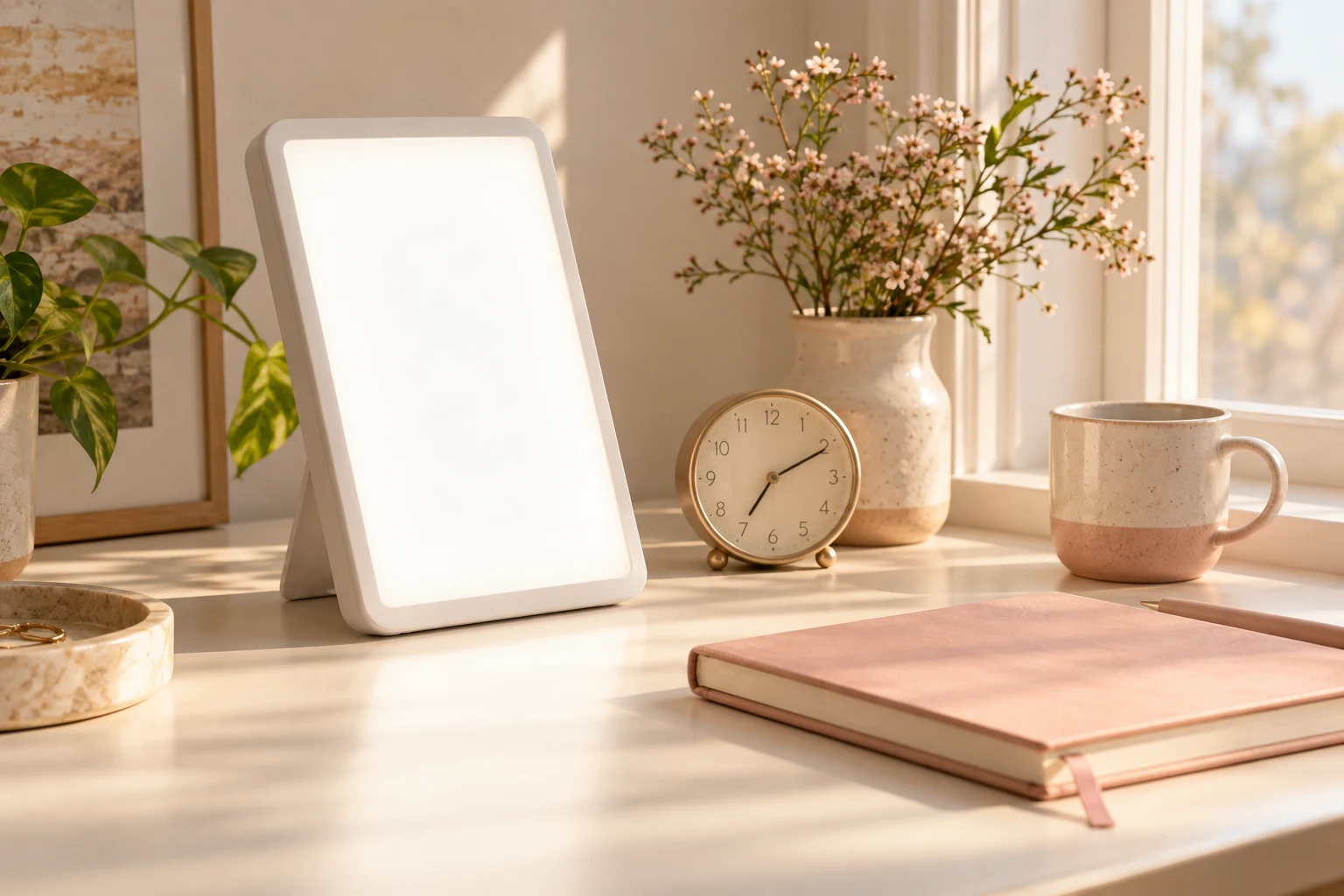
Ask: “Which direction are we trying to move my sleep, and when should I use the light?” Write down the agreed timing rather than choosing it from a product photograph.
2. Is that routine meant for winter depression?
NIMH describes a 10,000-lux, UV-filtering light box for winter-pattern seasonal affective disorder, usually used first thing in the morning for about 30 to 45 minutes daily. That is a description of treatment for a particular form of depression. It is not a universal prescription for difficulty sleeping.2
Ask: “Does this advice apply to the condition we are treating?” If your main concern is a seasonal change in mood, tell the clinician about that alongside your sleep pattern. NIMH recommends professional assessment when symptoms suggest seasonal affective disorder.2
3. What needs checking before you start?
NHLBI advises asking a doctor before light therapy if you have an eye condition or take medicines that increase light sensitivity. Report problems during use: possible side effects include eye strain, headache, migraine, nausea and agitation.1
Ask: “Do my eye history or medicines change this plan, and what should I do if symptoms develop?” Bring your medication list and the details of the device you are considering.
4. What will you record for the follow-up?
NHLBI describes a diagnostic review of when, how long and how well you sleep, sometimes supported by a sleep diary. Assessment can also include your health history, symptoms, environment and testing. A diary alone does not establish a diagnosis.3
Ask: “What should I record, and when will we review it?” Keep the agreed instructions with your notes. Record the times you used the light and any difficulty following the plan, so the follow-up can address what happened.

The Girl Playbook Volume 10
Did I Do That in My Sleep?
Chapter 10’s “Light, Screens and a Usable Routine” discusses daily light patterns and asking for advice that fits your schedule. The book’s 14-Night Lights-Out Record helps organize observations for a conversation about sleep.
Explore the sleep bookGirl Playbook sells this book. It provides education and worksheets, not individualized medical care or a light-therapy prescription.
Check the sources
US public-health guidance, reviewed October 16, 2026.
- National Heart, Lung, and Blood InstituteCircadian Rhythm Disorders: Treatment (2022) (opens in a new tab)↩ 1↩ 2
- National Institute of Mental HealthSeasonal Affective Disorder (2023) (opens in a new tab)↩ 1↩ 2
- National Heart, Lung, and Blood InstituteCircadian Rhythm Disorders: Diagnosis (2022) (opens in a new tab)↩ 1
For general education. A clinician who knows your history can assess symptoms and plan treatment. This page does not diagnose a sleep disorder or recommend a particular device.