Pelvic Floor Physical Therapy for Interstitial Cystitis: The Trial
Bladder & Pelvic FloorArticleMany women with interstitial cystitis have tight, tender pelvic floor muscles. In a North American trial of 81 women, 59% of those given hands-on pelvic floor physical therapy rated themselves moderately or markedly better, against 26% given a general massage. Here is what the therapy involves, what the trial couldn't show, and why squeezing exercises may be the wrong move.
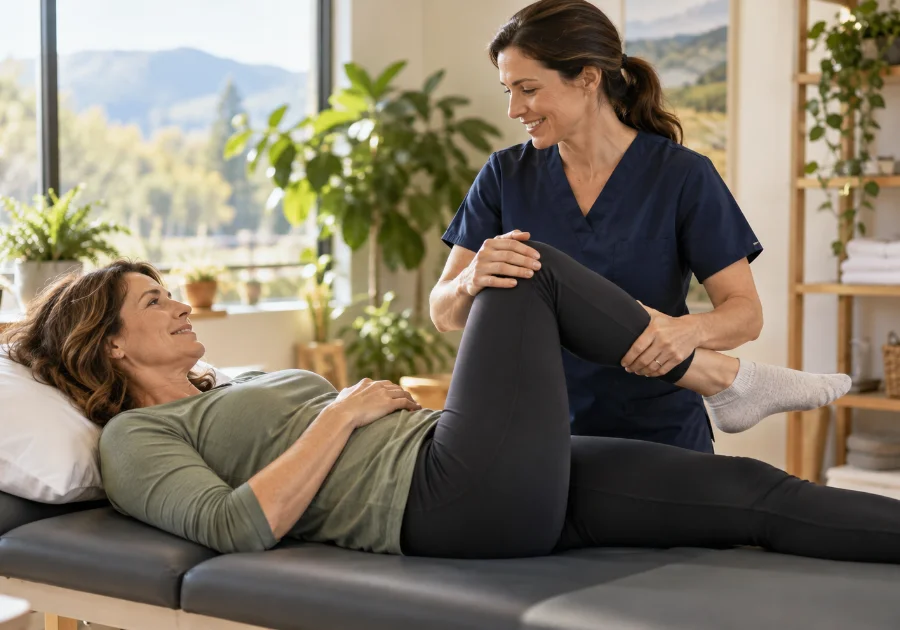
Interstitial cystitis, also called bladder pain syndrome, causes pain or pressure in the bladder along with frequent, urgent peeing. Many women with it also have pelvic floor muscles that are tight and tender. A hands-on kind of physical therapy aims at those muscles, and a multicenter trial tested it.
The trial
At 11 centers in North America, researchers recruited women with interstitial cystitis who had tender pelvic floor muscles on examination and had had symptoms for 3 years or less.1 81 women were split into two groups, each offered 10 sessions:1
- Myofascial physical therapy: hands-on therapy aimed at the pelvic floor muscles.
- Global therapeutic massage: a general massage, used as the comparison.
The main measure was simple: did women rate their overall symptoms moderately or markedly better than at the start?1
What happened
| General massage | Pelvic floor physical therapy | |
|---|---|---|
| Moderately or markedly better | 26%1 | 59%1 |
- Pain, urgency and frequency scores fell in both groups, and the difference between groups on those scores wasn’t significant.1
- Pain was the most common side effect, at similar rates in both groups, and there were no serious side effects.1
An earlier pilot trial of 48 men and women with pelvic pain syndromes found a similar pattern: 57% responded to the physical therapy against 21% with massage.2
How to read this
The trial was small and short, and it only included women with tender muscles and fairly recent symptoms.1 The headline result was the women’s own overall rating; the separate pain and urgency scores didn’t clearly favor the therapy.1 So it’s encouraging evidence, not proof that it works for everyone with bladder pain.
Release, not squeeze
The therapy in this trial works on letting the muscles go, which is the opposite of a Kegel. US health guidance says a pelvic floor therapist can help stretch tight muscles and keep them relaxed, and that people with interstitial cystitis should avoid strengthening exercises like Kegels unless they’re working with a physical therapist.3 Pelvic floor therapy and biofeedback are also listed as ways to ease muscle tension and spasms.4
See can a tight pelvic floor cause bladder symptoms? and what interstitial cystitis is.
What to ask for
- A pelvic floor physical therapist who treats pelvic pain, not only leaks.
- An examination for tender or tight muscles. That’s who the trial studied.
- What the sessions involve, including whether any part is internal. You can ask questions and say no to any part.
- A diary before and during treatment, so you can see whether frequency and urgency are shifting. See bladder diary.
Try: “My bladder pain hasn’t settled, and I’ve been doing Kegels for months. Could tight pelvic floor muscles be part of this, and can you refer me to a pelvic floor physical therapist who treats pain?”
Laugh, Sneeze, Jump covers this in Chapter 9, “When It’s Been Years,” in a section called “When Squeezing Is the Wrong Move.” Its Three-Day Read, a bladder diary with a bowel column, can flag the urgency, effortful emptying and pain worth showing a therapist. See the book.
This article is for general educational purposes only and is not medical advice. It isn't a substitute for diagnosis or treatment from a qualified healthcare professional who knows your health history. Bladder pain and frequency can have other causes, including infection, stones and, rarely, cancer; get checked before assuming it's interstitial cystitis. See a clinician promptly for blood in your urine, fever, burning when you pee, or trouble emptying your bladder. Girl Playbook does not endorse any specific product, test, or provider.
Girl Playbook sells this book. It provides education and worksheets, not individualized medical care.
Sources
The research behind this article, in the order it’s cited. How we source our articles.
- Journal of Urology, 2012 trial (via PubMed Central), 2012Randomized multicenter clinical trial of myofascial physical therapy in women with interstitial cystitis/painful bladder syndrome and pelvic floor tenderness (opens in a new tab)abcdefghi
- Journal of Urology, 2013 feasibility trial (via PubMed Central), 2013Randomized multicenter feasibility trial of myofascial physical therapy for the treatment of urological chronic pelvic pain syndromes (opens in a new tab)↩
- National Institute of Diabetes and Digestive and Kidney Diseases, 2026Treatment of Interstitial Cystitis (Bladder Pain Syndrome) (opens in a new tab)↩
- MedlinePlus, 2026Interstitial cystitis (opens in a new tab)↩
Spotted something out of date? Tell us and we’ll check it.


