Girl Playbook book guide / Promotional content
Field guide Breath & mouth
Toothbrush
pressure sensors
A pressure warning, a two-minute timer and a coverage display answer different questions. Learn what to check on your own brush.
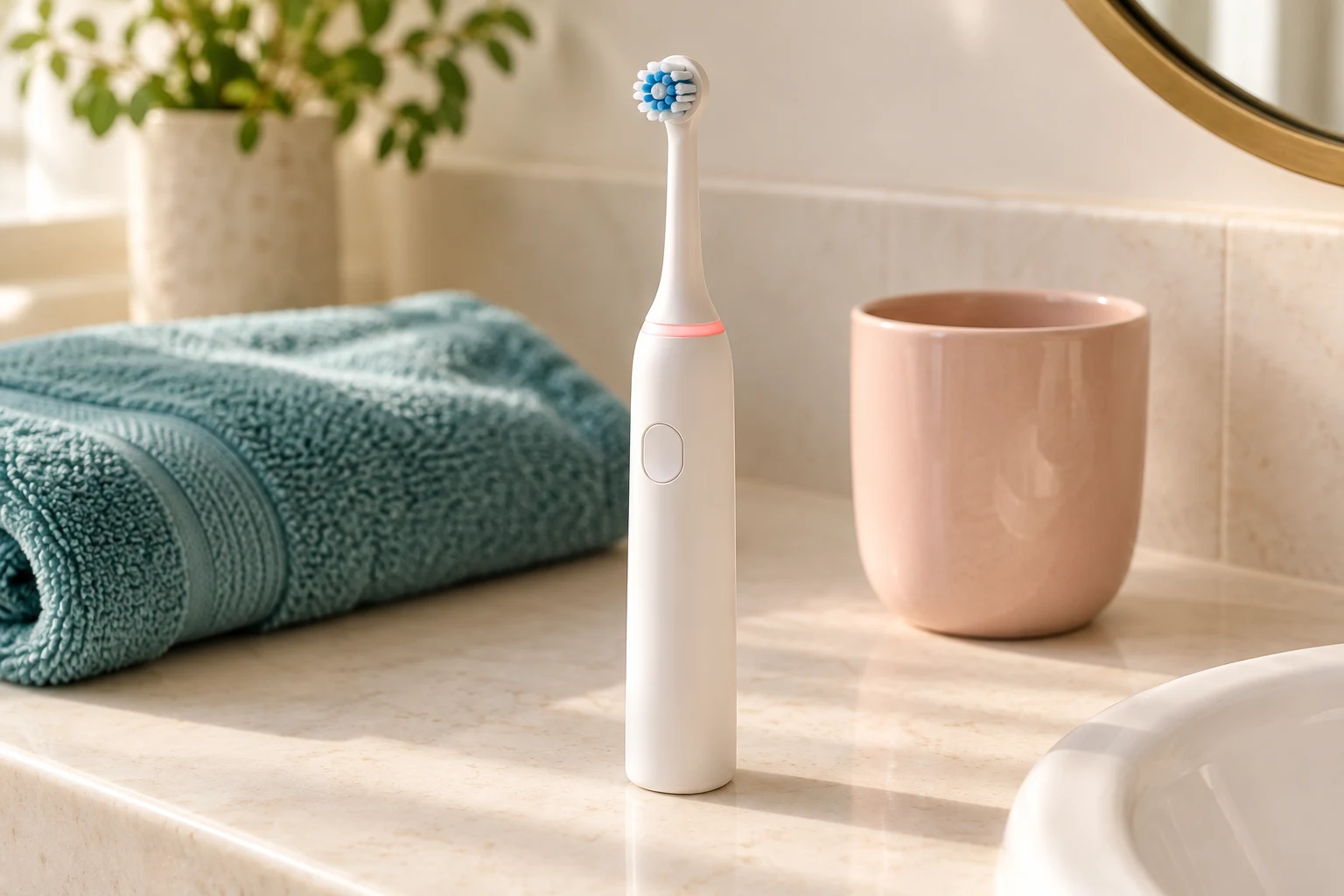
Read the signal, then check the manual
The examples below explain features, not which brush to buy. Tap a panel to see the distinction. Your model may use different lights, sounds or settings.
Pressure A cue about force
Philips says excessive pressure can trigger a light, altered vibration or sound, depending on the Sonicare model. The warning stops when pressure is reduced. If no warning appears, check whether your model includes the feature and whether it is enabled. Follow its manual rather than borrowing a button sequence from another brush.1
Use it for: recognizing the brush’s pressure alert. Silence alone does not tell you whether the sensor is switched on.
Time A cue about duration
The Oral-B iO system described in its professional product information includes a timer intended to encourage at least two minutes of brushing. A timer reports duration; it does not establish where the bristles spent those minutes.2
Use it for: keeping track of time while still paying attention to the surfaces you are cleaning.
Coverage A cue about position
That Oral-B system also describes position detection and 16 brushing zones. Those are separate features from its pressure ring, which signals recommended pressure in green and excessive pressure in red. A pressure color and a coverage map are answering different questions.2
Use it for: understanding which feature you are viewing. Do not treat a favorable pressure signal as confirmation that every surface was cleaned.
Does more feedback mean less plaque?
A 2025 randomized trial3 enrolled 60 people after initial treatment for periodontitis; 53 completed 12 weeks. It compared manual brushing, electric brushing and electric brushing with daily visual feedback. Plaque levels improved in all three groups, without a statistically significant difference in plaque removal between groups. PubMed lists material support from Oral-B, Procter & Gamble.3
That finding does not establish that feedback is useless or that all brushes perform identically. It describes a small, specific patient group over 12 weeks. It also does not isolate the benefit of a pressure warning by comparing the same sensor switched on versus off.3
A useful distinction: the feature description tells you what the device reports. A clinical study asks whether a measured health outcome improves.
Keep the brushing task in view
The ADA recommends soft bristles, gentle pressure, fluoride toothpaste and brushing twice daily for two minutes. It says to clean inner, outer and chewing surfaces. Those tasks still matter when a handle has lights or an app.4
At your next dental visit, bring your brush or its model number and ask: “Can you watch how I use this? Which signal should I respond to, and which surfaces am I missing?” A demonstration gives the conversation something specific to address.

Volume 08 The Girl Playbook
Is It My Breath?
Chapter 2, “Brush Harder, Mask It, Keep Your Distance,” examines the idea that more scrubbing is always the answer to breath concerns. Use it to put your brushing routine in context, alongside advice from your dental team.
Explore the mouth & breath bookGirl Playbook sells this book. It provides education, not a diagnosis or a recommendation to buy either toothbrush brand discussed here.
Check the sources
Manufacturer feature descriptions, an original trial abstract and dental guidance. Reviewed October 16, 2026.
- Philips SonicareHow does the pressure sensor feedback work on my Sonicare toothbrush? (opens in a new tab)↩ 1
- Crest + Oral-B Professional ShopCrest + Oral-B iO Electric Toothbrush System: Professional Trial Unit (opens in a new tab)↩ 1↩ 2
- Journal of Clinical Medicine, original abstract via PubMedThe Effect of Visual Feedback on Plaque Control: An RCT Comparing Toothbrushing Methods in Periodontitis Patients (2025) (opens in a new tab)↩ 1↩ 2↩ 3
- American Dental AssociationToothbrushes (opens in a new tab)↩ 1
For general education. Toothbrush feedback does not replace advice or an examination from your dental team. This guide does not diagnose gum disease or evaluate an individual device.