Vaginal Estrogen's Scary Package Insert: What the Safety Evidence Shows
Intimate HealthArticleMany women never fill a vaginal estrogen prescription after reading the long list of warnings in the box. A systematic review found blood estrogen levels stayed in the postmenopausal range with most products, and uterine lining problems were extremely rare.
In this article
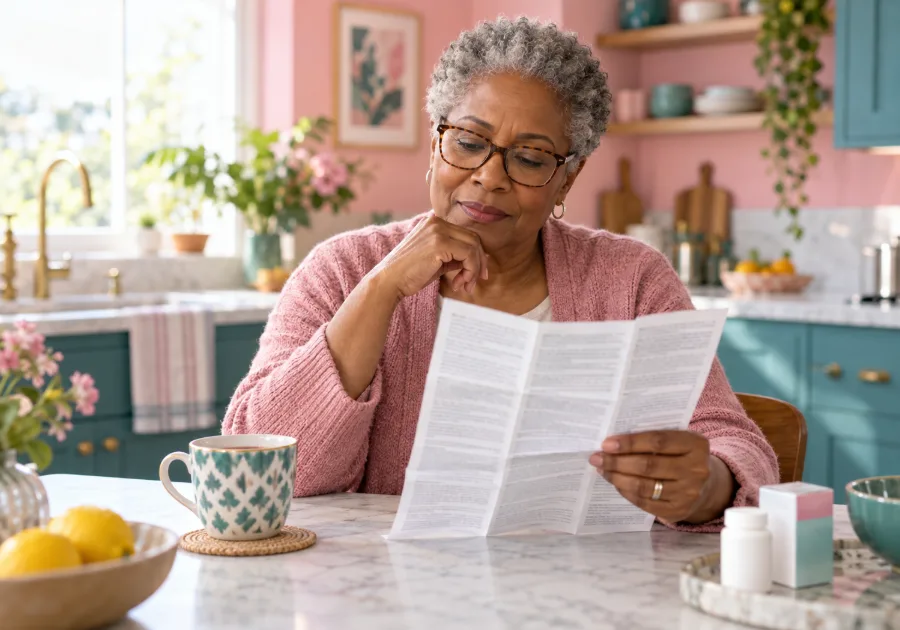
You finally bring up dryness or painful sex, leave with a prescription for vaginal estrogen, and then read the insert: a long list of serious warnings. Many women stop right there. A 2025 review on urinary infections acknowledged that patients and clinicians may worry about safety because of the package insert.1 Here is what research on low-dose vaginal products shows.
Myth: vaginal estrogen floods your body with hormones
A systematic review of 44 studies found that blood estradiol levels stayed within the normal postmenopausal range for all commercially available vaginal estrogen products except high-dose conjugated estrogen cream.2
Myth: it often causes uterine cancer
The same review found that thickening of the uterine lining and uterine cancer were extremely rare among women using vaginal estrogen.2 Any bleeding after menopause still needs to be checked.
What it does well
Compared with placebo, vaginal estrogen improved:2
- dryness and painful sex
- urinary urgency and frequency
- stress and urge leaks
- repeat urinary tract infections
The various products worked similarly and had similar safety.2 A 2025 review says vaginal estrogen should be considered before preventive antibiotics for postmenopausal women with repeat UTIs.1 Our article on UTIs after sex covers that.
When a moisturizer may be enough
Women with two or more symptoms improved substantially more with estrogen than with moisturizers, but women with one or minor complaints did about as well with either.2 Nonhormonal moisturizers are also an option for women at risk of estrogen-related cancers.2 Our guide to vaginal moisturizers and lubricants explains them.
Questions to ask
- Which form fits me: cream, tablet, insert or ring?
- How much and how often, and when do I drop to a maintenance dose?
- What if I’ve had breast or uterine cancer? Ask your oncologist.
- What bleeding or symptoms should I report?
Our comparison of local vaginal estrogen and systemic hormone therapy explains how they differ.
Try: “The warnings in this box scared me. How much estrogen actually reaches my bloodstream with this product, and what should I watch for?”
Down There, Decoded includes a Down-There Log and a See script for appointments. Use them to track symptoms before and after starting treatment and note your questions. Explore the intimate-health playbook.
This article is for general educational purposes only and is not medical advice. It isn't a substitute for diagnosis or treatment from a qualified healthcare professional who knows your health history. Please don't ignore professional advice or delay getting care because of something you read here. Any vaginal bleeding after menopause should be checked by a clinician. If you have had breast or uterine cancer, make decisions about vaginal estrogen with your oncologist. If you think you may be having a medical emergency, call 911 or your local emergency number right away. This article discusses a category of prescription medicines and published research. Girl Playbook does not endorse any specific product, test, or provider.
Girl Playbook sells this book. It provides education and worksheets, not individualized medical care.
Sources
The research behind this article, in the order it’s cited. How we source our articles.
- Clinical Infectious Diseases (full text via PubMed Central), 2025State-of-the-Art Review: Recurrent Uncomplicated Urinary Tract Infections in Women (opens in a new tab)ab
- Obstetrics and Gynecology (full text via PubMed Central), 2014Vaginal estrogen for genitourinary syndrome of menopause: a systematic review (opens in a new tab)abcdef
Spotted something out of date? Tell us and we’ll check it.


