What Are Uterine Fibroids?
PeriodsArticleWhat these muscular growths in the uterus are, why they're so common by 50, the heavy periods and pressure symptoms they can cause, who's more likely to get them, and the range of treatments from medicines to surgery.
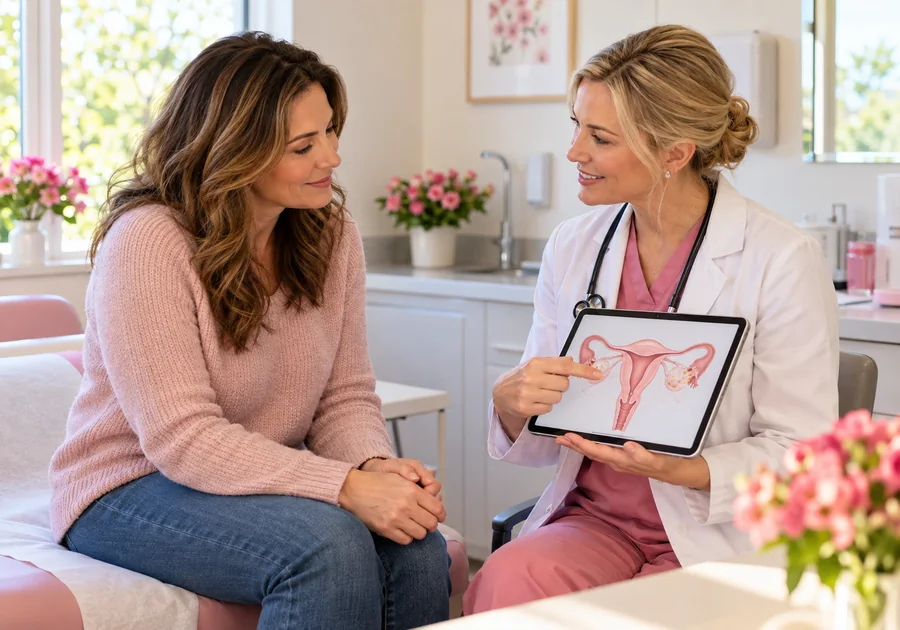
Your periods used to be annoying, and now they’re a logistics problem. You plan your week around the first three days. You’re changing a pad every hour or two, and you’re tired in a way that doesn’t match your life. You also feel a little full low in your belly, and your jeans fit differently. At your checkup, a clinician pressed on your abdomen and said one word: “fibroids.”
What they are
The Eunice Kennedy Shriver National Institute of Child Health and Human Development (NICHD)2 describes growths made of smooth muscle cells, fibroblasts and other material, in single tumors or clusters. It names them by location: submucosal (beneath the uterine lining), intramural (within the muscle), subserosal (outside the uterus) and pedunculated (on stalks).
Symptoms
The NHS3 says fibroids do not always cause symptoms. When they do, they can cause heavy or painful periods, abdominal pain, lower back pain, urinary changes, bowel problems, painful sex and difficulty getting pregnant. The OWH1 lists heavy bleeding, which can be heavy enough to cause anemia, painful periods, pelvic fullness, enlargement of the lower abdomen, frequent urination and pain during sex. See heavy periods, bad cramps, needing to pee often and painful sex. Heavy bleeding and tiredness can add up to anemia, see why am I always so tired.
Who gets them
The NHS3 says the exact cause is unknown. Its risk factors include not having reached menopause, no full-term pregnancies, being overweight, high blood pressure or diabetes, a Black or Asian background and a close relative who has fibroids. The OWH1 says African-American women are more likely to develop fibroids than white women, and that risk rises with age, family history and higher body weight.
How they’re found
The OWH1 says a doctor can often feel a fibroid during an ordinary pelvic exam, and that ultrasound, MRI or CT and procedures like laparoscopy or hysteroscopy can confirm the diagnosis.
Treatment
The NHS3 says treatment may include painkillers such as ibuprofen, naproxen or diclofenac, and hormone treatments or tranexamic acid for heavy bleeding. The OWH1 lists birth control pills, progesterone-like injections and hormone agonists.
For procedures and surgery, the NHS3 lists myomectomy (removing the fibroids), hysterectomy, endometrial ablation and uterine artery embolization, and notes that fibroid surgery and procedures are not suitable for everyone. The OWH1 says uterine artery embolization blocks the blood supply to the fibroids.
On fertility, the NHS3 says if you plan on having children, talk with a doctor about your options, because some treatments can prevent you from having children or increase the risk of problems during pregnancy. It says untreated fibroids can rarely cause infertility or miscarriage.
Try this: a period and pressure log
For two or three cycles, write down how many days you bleed, how many pads or tampons you use on your heaviest day, clots, pain level, and bladder or bowel changes.
Note tiredness, dizziness or shortness of breath, and any change in your lower belly size.
Bring the log to your appointment and ask about imaging and treatment options.
When to get checked
Don’t wait if
- Urgent
Get urgent care for extremely heavy bleeding with dizziness or severe pelvic pain.
The NHS3 says to contact your doctor if you have fibroid symptoms, if they affect your everyday life, work and relationships, or if painkillers aren’t working.
Book an appointment if any of these fit:
- Periods are heavy or painful enough to change your plans
- You feel fullness, pressure or enlargement in your lower belly
- You’re peeing more often, or you have constipation
- Sex is painful
- You’re trying to conceive and have heavy or painful periods
- You’ve been told you have fibroids and your symptoms have changed
Fibroids are a finding, not a failing. What they cause is what gets treated.
Extremely heavy bleeding, soaking through products every hour or two, dizziness or severe pelvic pain needs prompt medical care.
This article is for general educational purposes only and is not medical advice. It isn't a substitute for diagnosis or treatment from a qualified healthcare professional who knows your health history. Please don't ignore professional advice or delay getting care because of something you read here. If you think you may be having a medical emergency, call 911 or your local emergency number right away. Girl Playbook does not endorse any specific product, test, or provider.
Girl Playbook sells this book. It provides education and worksheets, not individualized medical care.
Sources
The research behind this article, in the order it’s cited. How we source our articles.
- Office on Women's Health (OWH)Uterine fibroids (opens in a new tab)abcdef
- Eunice Kennedy Shriver National Institute of Child Health and Human Development (NICHD)Uterine Fibroids: Condition Information (opens in a new tab)ab
- NHSFibroids (opens in a new tab)abcdef
Spotted something out of date? Tell us and we’ll check it.