Why Do I Get Diarrhea on My Period?
PeriodsArticleWhy prostaglandins and shifting hormones send you to the bathroom more around your period, why constipation can come first, what helps, and the symptoms that point to something else.
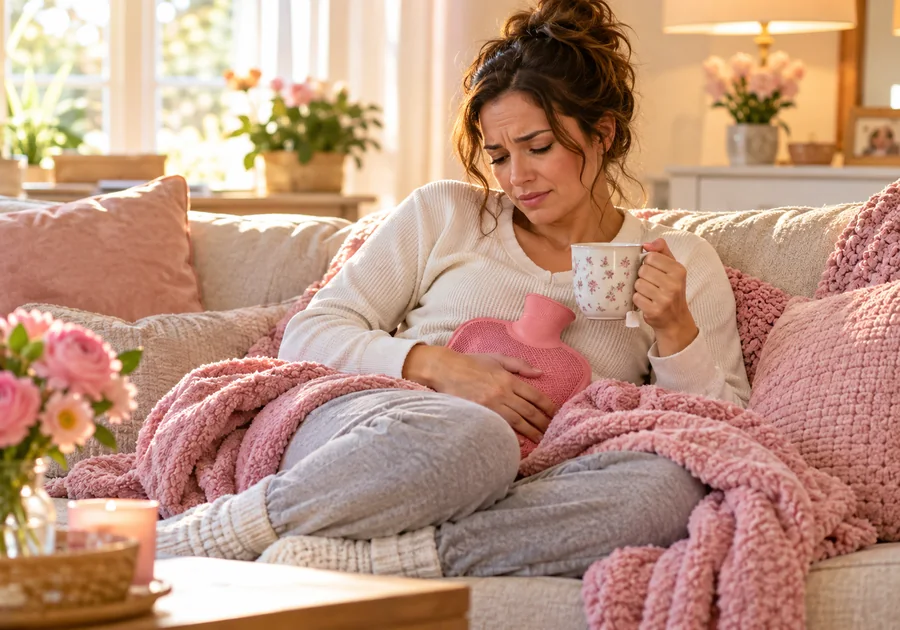
Day one. You’ve already made two trips to the bathroom, the cramps are rolling in, and you’re mentally rearranging your morning around where the nearest restroom is. Last month it was the opposite, a few days of nothing at all.
Why your gut joins in
The uterus and the bowel both run on smooth muscle, and the prostaglandins released around your period don’t stay in one place. Cleveland Clinic1 says it can mean more frequent bowel movements and loose stools.
Progesterone works in the opposite direction. Cleveland Clinic1 says it tends to promote constipation, and that this tends to arrive around ovulation or a couple of days after. The CDHF2 explains that higher progesterone before your period can slow the transit of waste through the gut. So the same month can bring constipation first and diarrhea after. For more on the slow side, see constipation.
The CDHF2 says symptoms peak during the menstrual phase itself, and that people with IBS are especially likely to notice, with bloating a common complaint. See IBS and dairy and bloating for the overlap.
The cramps that come with it
The Office on Women’s Health (OWH)3 calls period pain dysmenorrhea and says more than half of women who have periods get some pain around them. Our article on bad cramps covers what’s typical.
What helps
Fluids. The CDHF2 says to replace what you lose, with broths, potassium-rich fruits and vegetables and oral rehydration solutions. Cleveland Clinic1 says to stay hydrated and to go easy on coffee, which has a laxative effect.
Food. Cleveland Clinic1 suggests plenty of fruits, vegetables and leafy greens.
An anti-inflammatory painkiller. Cleveland Clinic1 says taking ibuprofen before your period may prevent prostaglandin release. OWH3 says over-the-counter NSAIDs such as ibuprofen, naproxen or aspirin relieve most period pain. Check with your clinician or pharmacist that an NSAID is safe for you.
Hormonal birth control. Cleveland Clinic1 says oral contraceptives can make periods less frequent, which makes this happen less often, though it doesn’t fix the problem. That’s a conversation for your own clinician.
Try this: a bowel-and-cycle log
For two or three cycles, write down the first day of your period alongside each day’s bowel habits, constipated, normal or loose, plus cramps and bloating.
The CDHF2 suggests tracking bowel movements next to your cycle dates to see the pattern.
A pattern that tracks your cycle is useful to see. Loose stools all month, or trouble that doesn’t follow the calendar, is worth taking to your appointment.
When to get checked
Cleveland Clinic1 says to see a doctor for severe cramping or blood in your stool. The CDHF2 says life-impacting pain during periods, bowel movements or urination can point to endometriosis. OWH3 says to talk with a doctor or nurse if over-the-counter medicine doesn’t help or pain interferes with daily activities, and lists blood clots larger than a quarter among the signs to mention. Our articles on endometriosis and heavy periods cover those.
Book an appointment if any of these fit:
- Blood in your stool
- Pain with bowel movements or with peeing during your period
- Cramps that medicine doesn’t touch, or that keep you from work or school
- Clots larger than a quarter
- Symptoms that have changed or gotten worse over time
A loose stool or two on day one is your uterus and bowel working off the same signal. Pain that sends you to bed is a separate question, and it has answers.
Blood in your stool, severe pain or diarrhea that won't let up should be checked rather than blamed on your period.
This article is for general educational purposes only and is not medical advice. It isn't a substitute for diagnosis or treatment from a qualified healthcare professional who knows your health history. Please don't ignore professional advice or delay getting care because of something you read here. If you think you may be having a medical emergency, call 911 or your local emergency number right away. Girl Playbook does not endorse any specific product, test, or provider.
Girl Playbook sells this book. It provides education and worksheets, not individualized medical care.
Sources
The research behind this article, in the order it’s cited. How we source our articles.
- Cleveland ClinicPeriod Poops: Why Do They Happen? (opens in a new tab)abcdefgh
- Canadian Digestive Health Foundation (CDHF)Period Poop 101 (opens in a new tab)abcdef
- Office on Women's Health (OWH)Period problems (opens in a new tab)abc
Spotted something out of date? Tell us and we’ll check it.


