Why Do I Keep Getting Canker Sores?
Breath & MouthArticleWhat canker sores are, why they flare around your period or under stress, which nutrient shortfalls and conditions are linked to repeat sores, what soothes them, and when a mouth ulcer needs a check.
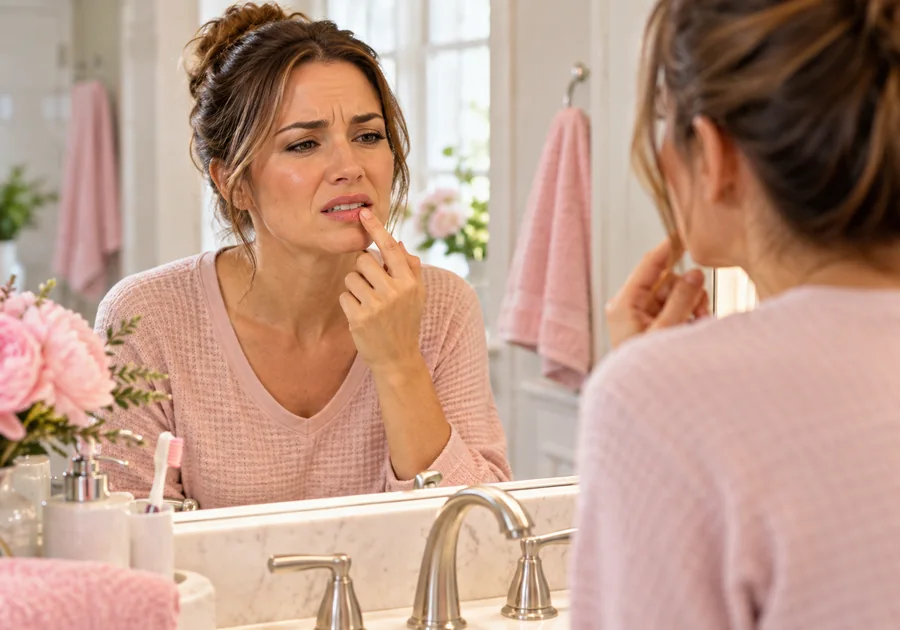
It’s a tiny white spot on the inside of your lip, and it has the personality of a thumbtack. Orange juice is out. The toothbrush is a negotiation. You had one of these a few months ago, and you’re pretty sure it came back right around your period.
What sets them off
Cleveland Clinic3 says stress and minor injuries to the inside of the mouth are possible triggers. Other factors on its list are nutritional deficiencies (B12, D, folate, iron, zinc), immune system conditions, medicine side effects, acidic or spicy foods and toothpastes containing sodium lauryl sulfate.
Hormones. Cleveland Clinic3 says females are more susceptible than males, and that changing hormone levels during your period can trigger a sore. The National Institute of Dental and Craniofacial Research (NIDCR)4 says canker sores are most common in puberty, when certain growth-related hormones are higher, and lists hormonal imbalances among triggers.
Nutrients. The NIDCR4 lists nutritional deficiencies in folic acid, iron or vitamin B12. The NHS2 names a vitamin deficiency such as iron, zinc, folic acid, vitamin B or vitamin D.
Injury. The NHS2 lists biting the inside of your cheek, ill-fitting dental work and sharp foods. It also lists stress and hormonal changes such as during pregnancy.
How long they last
The ADA1 says canker sores usually heal on their own after one or two weeks. Cleveland Clinic3 says the pain usually improves in a few days and that the ulcers typically heal within two weeks even without treatment, though major ones can take months.
What helps
The NHS2 says there’s no quick fix, and that the sores need time to heal. It suggests a soft toothbrush, cool drinks through a straw and avoiding heavily spiced, salty or acidic foods. It describes a salt-water rinse of half a teaspoon of salt in warm water. A pharmacist can recommend antimicrobial mouthwash, painkillers or corticosteroid lozenges.
The ADA1 says over-the-counter topical anesthetics and antimicrobial mouthwashes can give temporary relief, and to stay away from hot, spicy or acidic foods. It says a dentist can prescribe antibiotics and oral bandages to reduce secondary infection. The NIDCR4 says OTC numbing gels can ease pain and that rinsing with an OTC antiseptic may help prevent infection and speed healing.
Cleveland Clinic3 lists alcohol-free mouth rinses and notes that prescription options exist for severe cases.
Try this: a flare diary and a toothpaste swap
For two or three months, write down when each sore appears, where, how long it lasts and what came before it: your cycle day, a stressful week, an injury, a new food, a new product.
Cleveland Clinic3 lists sodium lauryl sulfate in toothpaste as a possible trigger. Check your tube and try one without it if yours has it, then see if the flares change.
Bring the diary to your dentist or doctor if the sores keep coming.
When to get checked
Cleveland Clinic3 says to contact your provider if sores last beyond two weeks, are larger than a centimeter, come with flu-like symptoms, return several times a year or interfere with daily activities. The NIDCR4 says to see a doctor if you have frequently recurring canker sores or if they make eating or drinking difficult. It adds that people with recurring sores should talk with their doctor about testing for celiac disease or nutritional deficiencies.
The NHS2 says to see a dentist or GP if a mouth ulcer lasts longer than 3 weeks, because a long-lasting mouth ulcer is sometimes a sign of mouth cancer.
Book an appointment if any of these fit:
- A sore has lasted more than 2 weeks, or has passed 3 weeks
- A sore is larger than a centimeter, or keeps getting bigger
- You have flu-like symptoms or a fever with it
- You get sores several times a year
- You can’t eat or drink comfortably
- You’d like to be tested for celiac disease or low nutrients, which the NIDCR4 says to discuss when sores recur
One sore around your period is a nuisance. Sores that keep returning are a pattern, and the diary is how you show it.
A mouth sore that lasts more than 3 weeks, or that comes with a fever or trouble eating or drinking, should be checked by a dentist or doctor.
This article is for general educational purposes only and is not medical advice. It isn't a substitute for diagnosis or treatment from a qualified healthcare professional who knows your health history. Please don't ignore professional advice or delay getting care because of something you read here. If you think you may be having a medical emergency, call 911 or your local emergency number right away. Girl Playbook does not endorse any specific product, test, or provider.
Girl Playbook sells this book. It provides education and worksheets, not individualized medical care.
Sources
The research behind this article, in the order it’s cited. How we source our articles.
- American Dental Association (ADA)Canker Sores (opens in a new tab)abc
- NHSMouth ulcers (opens in a new tab)abcde
- Cleveland ClinicCanker Sore: Symptoms, Causes & Treatment (opens in a new tab)abcdef
- National Institute of Dental and Craniofacial Research (NIDCR)Fever Blisters and Canker Sores (opens in a new tab)abcde
Spotted something out of date? Tell us and we’ll check it.