Why Do I Sweat So Much at Night?
Odor & SweatArticleWhat night sweats are, why menopause is the most common cause but not the only one, how to cool your bed down, and the other causes worth ruling out with a clinician.
In this article
You wake up at 2 a.m. damp and cold. The pillowcase is wet, the sheet has a dark patch, and your pajamas are stuck to you. You change the shirt, flip the pillow, and lie there, tired and a little unnerved.
What counts
Cleveland Clinic1 describes night sweats as heavy sweating episodes that happen while you sleep, far more intense than ordinary perspiration. They can drench clothing and bedding, disrupt sleep and come with a sudden feeling of heat and a rapid heartbeat.
The causes
Hormonal. Cleveland Clinic1 says menopause is the most common cause, and that pregnancy and menstrual cycle changes can trigger episodes too. Our articles on hot flashes and perimenopause cover the pattern, and hormone therapy covers one treatment decision.
Infections. Cleveland Clinic1 lists bacterial and viral infections.
Medical conditions. It lists thyroid disorders, diabetes, sleep apnea and cancers such as leukemia and lymphoma. If you also snore loudly or gasp, see snoring and when it’s more than snoring.
Anxiety and substances. Cleveland Clinic1 says anxiety, panic disorders, alcohol and other substances can trigger sweating in your sleep.
Medicines. Cleveland Clinic1 says sweating can be a side effect of many medicines, including blood pressure medicines, antidepressants, some migraine medicines and pain relievers.
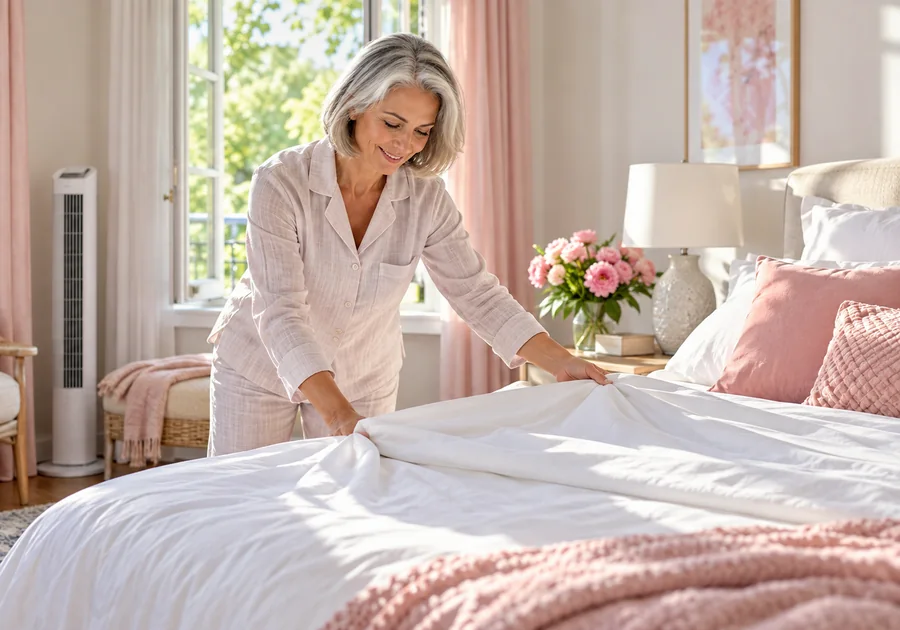
Cooling your bed
Cleveland Clinic’s2 tips for cooling a bedroom at night:
- Turn the temperature down. Lower your bedroom temperature and use a ceiling fan or another fan.
- Dress the bed in layers. Use a top sheet and light bedding so you can bundle up or pare down as needed.
- Wear light fabrics. Lightweight pajamas in breathable fabrics like cotton or linen.
- Try cooling products. Pillows and mattress covers filled with cooling gel.
- Skip the triggers. Avoid foods and drinks that make you sweat, such as spicy foods and caffeine. Cleveland Clinic’s2 hot flash guide also lists sugar, stress, hot baths and exercising in warm settings. The NHS3 lists alcohol and spicy food.
- Calm the stress. Mindfulness and deep breathing help, and research suggests anxiety may predict incoming hot flashes.
Try this: a ten-night sweat diary
Each morning, write down if you woke sweating, how heavy it was, and what the room temperature and bedding were like.
Add the night before: alcohol, spicy food, caffeine late in the day, a stressful evening, a new medicine.
Cleveland Clinic1 suggests tracking what occurs before episodes, and a clinician can use the diary to sort causes.
When to get checked
Cleveland Clinic1 says to schedule a visit if night sweats disrupt your sleep, since providers can find underlying causes and recommend treatment from lifestyle changes to medicine. The NHS3, on excessive sweating in general, says to see a GP if it happens weekly or nightly, goes on for 6 months or more, or affects your daily activities.
Book an appointment if any of these fit:
- Night sweats are soaking your sheets and waking you most weeks
- They started suddenly or are getting worse
- You also have a fever, unexplained weight loss, a cough or other new symptoms
- You snore loudly or gasp in your sleep
- You started a new medicine around when they began
- You’re having trouble coping, or the sweating is making you anxious
The 2 a.m. clothes change doesn’t have to be your routine. A cooler room helps tonight, and a diary helps decide what comes next.
If night sweats come with fever, unexplained weight loss, a cough that won't clear or other new symptoms, see a clinician soon.
This article is for general educational purposes only and is not medical advice. It isn't a substitute for diagnosis or treatment from a qualified healthcare professional who knows your health history. Please don't ignore professional advice or delay getting care because of something you read here. If you think you may be having a medical emergency, call 911 or your local emergency number right away. Girl Playbook does not endorse any specific product, test, or provider.
Girl Playbook sells this book. It provides education and worksheets, not individualized medical care.
Sources
The research behind this article, in the order it’s cited. How we source our articles.
- Cleveland ClinicNight Sweats: Menopause, Other Causes & Treatment (opens in a new tab)abcdefgh
- Cleveland ClinicHow To Reduce Hot Flashes at Night (opens in a new tab)ab
- NHSExcessive sweating (hyperhidrosis) (opens in a new tab)ab
Spotted something out of date? Tell us and we’ll check it.