Why Do My Joints Ache in Menopause?
Menopause & HormonesArticleWhy knees, hands and hips start hurting around menopause, what falling estrogen has to do with it, what low-impact movement can do, where hormone therapy fits, and when joint pain needs a closer look.
In this article
Your fingers are stiff when you wake up. The stairs have a new opinion about your knees. You’re opening a jar and your wrist objects. You’re not old, you tell yourself, and you haven’t changed what you do. Something has.
What estrogen has to do with it
Mass General Brigham2 says estrogen has anti-inflammatory properties, so when levels drop in menopause, there can be more inflammation in the body, affecting joints and muscles. It adds that lower estrogen can speed cartilage breakdown and increase swelling.
It names the knees, hips, shoulders, lower back, hands and wrists as the spots most often affected, and says that after 50, women develop osteoarthritis more often and more severely than men.
Joint pain is one of many changes in this stage, and our articles on perimenopause, weight changes and bone thinning cover others. The NHS1 notes that symptoms typically last 7 to 9 years, though that varies.
What helps
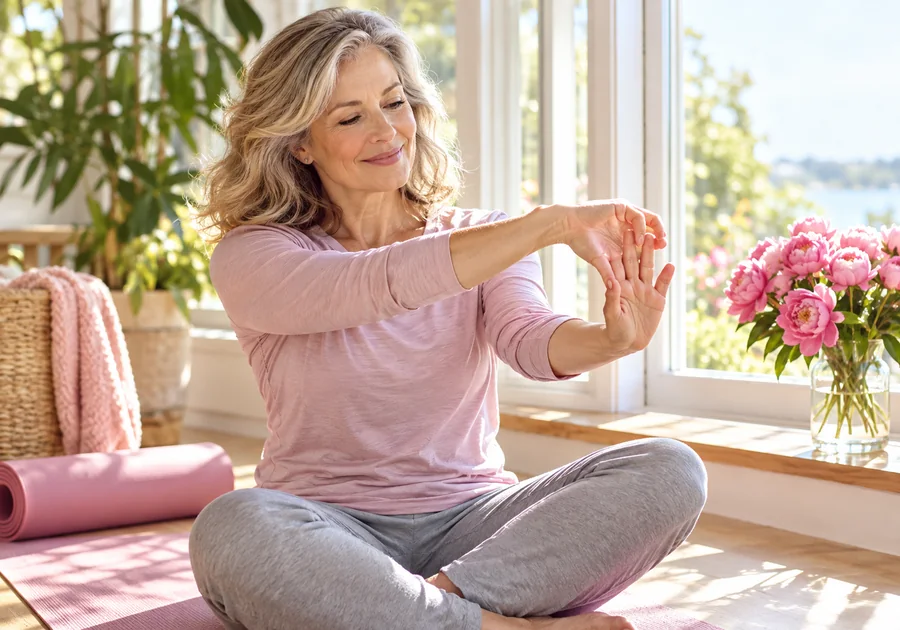
Move, gently and regularly. The Centers for Disease Control and Prevention (CDC)3 says physical activity can help people with arthritis reduce joint pain and improve function and mood. It recommends at least 150 minutes a week of moderate-intensity aerobic activity plus at least 2 days a week of muscle-strengthening. Joint-friendly options include brisk walking, cycling, dancing, tai chi and swimming or water exercise, chosen so they cause no or little pain. You can break it up. Short sessions of 5 or 10 minutes count.
The CDC3 says to start slowly and pay attention to how your body feels. Some discomfort at first is normal, but pain that persists is a reason to talk with your clinician.
Mass General Brigham2 lists low-impact movement such as swimming, walking and strength training for stiffness and pain, and says physical therapists can build an exercise plan for pain and stability.
Body weight. Mass General Brigham2 says extra weight adds pressure on the joints and can speed cartilage damage.
Medicines. It lists over-the-counter pain relievers, topical treatments and corticosteroid injections. Ask your pharmacist or clinician what’s safe for you, especially with other medicines.
Hormone therapy. Mass General Brigham2 says menopausal hormone therapy is not recommended solely to treat joint pain when you don’t have other menopause symptoms such as hot flashes, though research suggests modest improvement for some. If you do have those symptoms, see whether hormone therapy is safe.
Try this: a joint-friendly month
Pick two low-impact activities from the CDC3 list that you can do without pain, and schedule them. Walking after dinner counts.
Add two days of strength work, even five or ten minutes at a time.
Write down which joints hurt, when they’re worst (morning, after sitting, after activity) and what eases it. Bring the notes to your appointment.
When to get checked
The NHS1 says early advice can reduce the effects of menopause on your health, relationships and work. Mass General Brigham2 says to consult a rheumatologist or other provider when joint pain limits daily activities. The CDC3 says pain that persists with activity deserves a conversation with a clinician.
Book an appointment if any of these fit:
- Joint pain is limiting walking, work, sleep or daily tasks
- Pain keeps going even after you ease into activity
- Pain is getting worse over weeks
- You also have other menopause symptoms and haven’t talked treatment options through
Stiff fingers and complaining knees are common at this stage, and movement is on every list. Starting slowly counts.
Pain that keeps getting worse should be seen by a clinician. Check with a clinician before starting a new exercise program if you have a joint condition or other health problems.
This article is for general educational purposes only and is not medical advice. It isn't a substitute for diagnosis or treatment from a qualified healthcare professional who knows your health history. Please don't ignore professional advice or delay getting care because of something you read here. If you think you may be having a medical emergency, call 911 or your local emergency number right away. Girl Playbook does not endorse any specific product, test, or provider.
Girl Playbook sells this book. It provides education and worksheets, not individualized medical care.
Sources
The research behind this article, in the order it’s cited. How we source our articles.
- NHSMenopause symptoms (opens in a new tab)abc
- Mass General BrighamMenopause and Joint Pain (opens in a new tab)abcdef
- Centers for Disease Control and Prevention (CDC)About Physical Activity and Arthritis (opens in a new tab)abcd
Spotted something out of date? Tell us and we’ll check it.