Anti-Snoring Mouthpieces: Boil-and-Bite vs. Custom, and the Sleep Apnea Question
Sleep & NighttimeArticleDrugstore mouthpieces that pull your jaw forward promise quieter nights. Sleep and dental experts recommend ruling out sleep apnea first and prefer custom devices for those who have it.
In this article
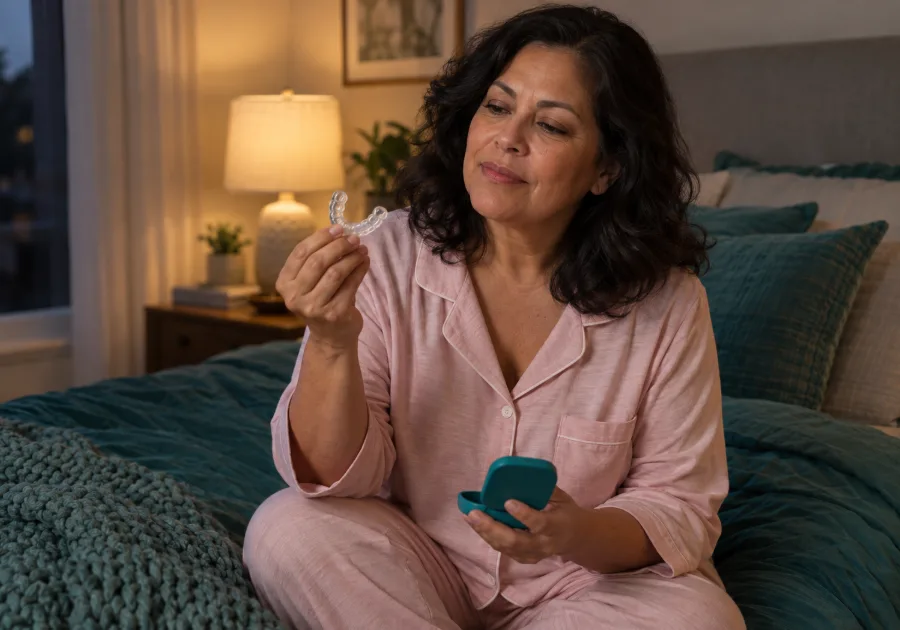
Snoring often starts or gets louder in midlife, and a partner’s elbow at 2 a.m. can send you shopping. Mouthpieces that hold the lower jaw forward are sold online and in drugstores, usually as “boil-and-bite” devices you mold at home. Here is what sleep and dental specialists recommend.
First, the sleep apnea question
Snoring can be harmless, or it can be a sign of obstructive sleep apnea, where breathing repeatedly stops or becomes shallow during sleep. The 2015 guideline from the American Academy of Sleep Medicine and the American Academy of Dental Sleep Medicine separates the two:
- For primary snoring without sleep apnea, it recommends that sleep physicians prescribe oral appliances rather than no treatment for adults who want it.1
- For sleep apnea, oral appliances are an option for people who can’t tolerate CPAP or prefer another treatment, with follow-up sleep testing to confirm the device is working.1
A store-bought mouthpiece can quiet the snore without fixing apnea. Our guides to why you snore and sleep apnea without snoring explain why women’s apnea is often missed.
Boil-and-bite vs. custom
| Boil-and-bite | Custom | |
|---|---|---|
| How it’s made | Mostly prefabricated, softened and molded at home1 | Made from impressions or scans of your teeth1 |
| Adjustable | Often limited | Can be titrated (moved forward gradually) |
| Guideline view for apnea | Not preferred | Recommended over non-custom devices1 |
The guideline suggests that for sleep apnea, a qualified dentist should use a custom, adjustable appliance rather than a non-custom device.1 It found insufficient evidence for tongue-retaining devices, which hold the tongue forward instead of the jaw.1
Side effects to watch for
Moving the jaw forward every night can cause problems. The guideline describes jaw joint (TMJ) pain, gum irritation, sore jaw muscles and changes in how your teeth fit together, and recommends dental follow-up to catch them.1 Jaw joint disorders were a common reason oral appliances weren’t a good fit.1
If you have crowns, implants, dentures, loose teeth or gum disease, ask your dentist before trying any mouthpiece.
Before you buy
- Get screened for sleep apnea if you have gasping, choking, pauses in breathing, morning headaches or daytime sleepiness.
- Ask your dentist whether your teeth and jaw can handle a mouthpiece.
- Stop if you get jaw pain or your bite feels different in the morning.
- Follow up. If you use a device for apnea, a repeat sleep test can confirm it’s working.1 Our article on oral appliance follow-up covers what to ask.
Try: “My partner says I snore loudly and sometimes stop breathing. Should I have a sleep test before trying a mouthpiece, and would a custom one be better for me?”
Did I Do That in My Sleep? includes a 14-Night Lights-Out Record and a Visit Brief. Use them to note snoring reports, waking and daytime sleepiness, and bring them to your appointment. See the book.
This article is for general educational purposes only and is not medical or dental advice. It isn't a substitute for diagnosis or treatment from a qualified healthcare professional who knows your health history. Please don't ignore professional advice or delay getting care because of something you read here. Loud snoring with gasping, choking, pauses in breathing or daytime sleepiness can be signs of sleep apnea and should be evaluated. If you think you may be having a medical emergency, call 911 or your local emergency number right away. This article discusses categories of devices and published guidance. It does not evaluate any particular brand or product. Girl Playbook does not endorse any specific product, test, or provider.
Girl Playbook sells this book. It provides education and worksheets, not individualized medical care.
Sources
The research behind this article, in the order it’s cited. How we source our articles.
- Journal of Clinical Sleep Medicine (full text via PubMed Central), 2015Clinical Practice Guideline for the Treatment of Obstructive Sleep Apnea and Snoring with Oral Appliance Therapy: An Update for 2015 (opens in a new tab)abcdefghij
Spotted something out of date? Tell us and we’ll check it.


