Your CPAP Checklist Before an Operation
Sleep & NighttimeArticleTell the pre-op team, pack the full setup and confirm the recovery instructions.
In this article
If your operation bag is already filling up, adding the CPAP case may feel like one more thing to remember. Start with the pre-op conversation, then pack the equipment together. This checklist is for someone who already uses CPAP for obstructive sleep apnea.
First: contact the pre-op team
- Tell the team you have sleep apnea and use CPAP. Mention if you were advised to use it but currently do not.1
- Report changed treatment, worse symptoms, stopped use or a broken machine before the operation.1
- Continue nightly CPAP as prescribed before surgery.1
Write down whom you spoke with and any instructions they gave you. If using the machine has become difficult, describe the problem directly: the mask, the equipment or getting through the night.
Next: pack one complete setup
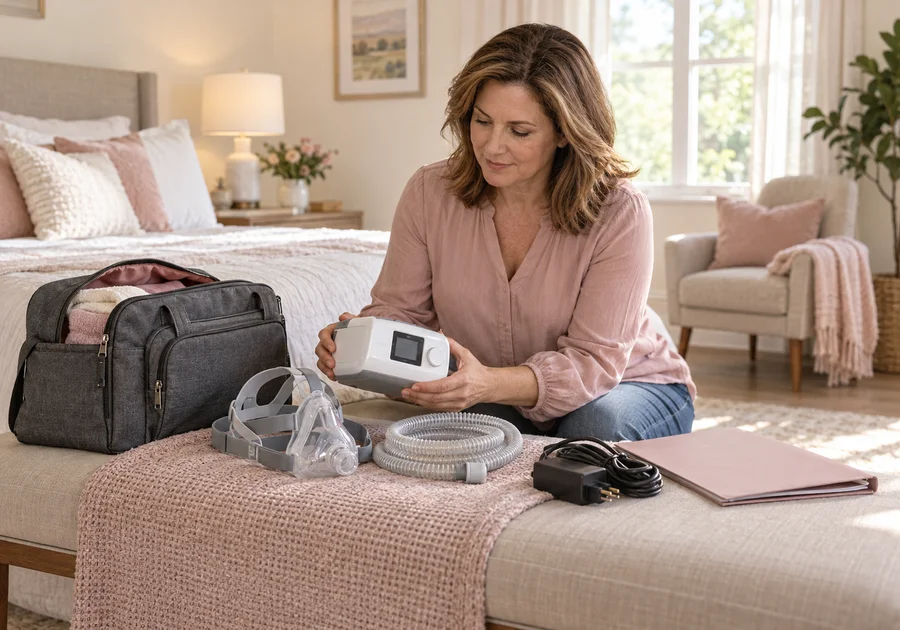
- Pack the machine, mask, tubing, power cable or charger and your usual humidifier attachment. Label the equipment with your name.1
- Bring it even for planned same-day surgery. Tell staff promptly if you forgot it.1
Put the equipment bag beside the bag you will take to hospital. Ask the hospital where it should go when you arrive, so the person accompanying you knows who needs it.
Before you leave: get the sleep instructions
- Ask when it is safe to restart CPAP and whether to use it for naps. Follow the clinical team’s instructions.1
- Ask about breathing monitoring, pain medicine choices and whether a longer stay may be needed. These can form part of your care plan.1
Leave space in your notes for the answers. Ask for clarification before discharge if the instructions are unclear, including whom to contact about a problem at home.
Keep the instructions with the appointment notes
Did I Do That in My Sleep? includes a Visit Brief and a Sleep Gear Decoder. Use those tools alongside the instructions from your surgical and sleep teams. See the book.
This article is for general educational purposes only and is not medical advice. It isn't a substitute for diagnosis or treatment from a qualified healthcare professional who knows your health history. Please don't ignore professional advice or delay getting care because of something you read here. If you think you may be having a medical emergency, call 911 or your local emergency number right away. Girl Playbook does not endorse any specific product, test, or provider.
Girl Playbook sells this book. It provides education and worksheets, not individualized medical care.
Sources
The research behind this article, in the order it’s cited. How we source our articles.
- University Hospitals Sussex NHS Foundation Trust, 2026Obstructive sleep apnoea (OSA) and CPAP therapy: information for patients having an operation (opens in a new tab)abcdefgh
Spotted something out of date? Tell us and we’ll check it.


