Crystal Deodorant Stones: Are They Aluminum-Free?
Odor & SweatArticleMineral crystal deodorants are often sold as a natural, aluminum-free swap. The crystal is usually potassium alum, which contains aluminum, and testing found levels similar to some antiperspirants.
In this article
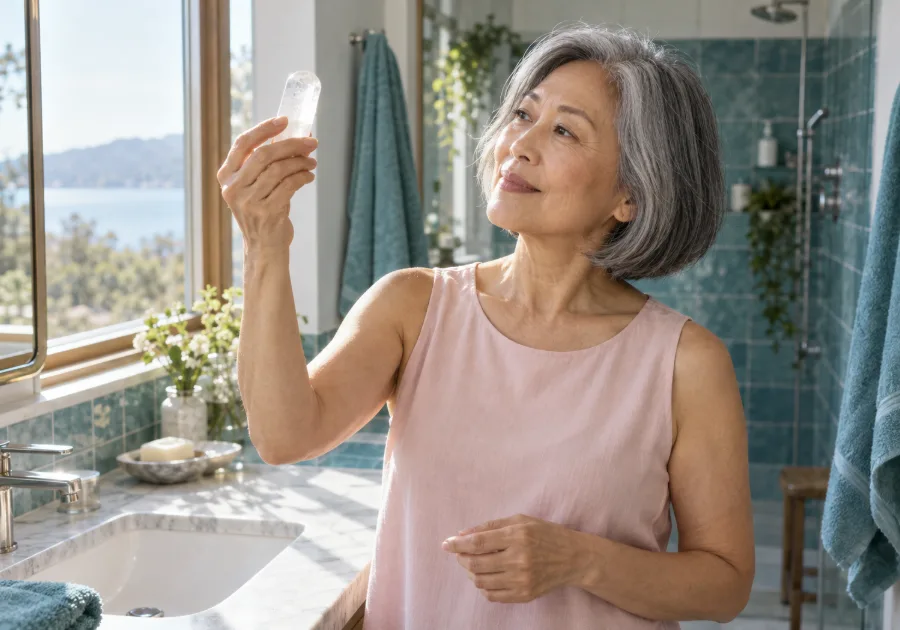
Clear mineral “crystal” deodorant stones, sprays and roll-ons are popular with women trying to avoid aluminum. You wet the stone and glide it over your underarms. Many are marketed as natural or aluminum-free. Here is what’s in them.
Myth: crystal deodorants contain no aluminum
Most crystal deodorants are made of potassium alum. Its chemical name is aluminum potassium sulfate, and its formula includes aluminum.1
A 2025 study measured elements in 72 underarm products sold in Europe, including roll-ons, sticks and natural alum stones. Antiperspirants contained about 0.9% to 4.4% aluminum, and the alum stones contained up to 4.7%.2
So a crystal may be free of the specific aluminum salts used in antiperspirants, but it isn’t free of aluminum.
Myth: crystals work like antiperspirants
In the U.S., a product sold to reduce wetness is an over-the-counter antiperspirant drug. It must list an approved active ingredient in a Drug Facts box and meet testing standards, such as at least a 20% sweat reduction for standard claims.3 Crystal stones are typically sold as deodorants, which target odor rather than wetness. If sweat is your main problem, look for a labeled antiperspirant. Our guide to clinical-strength antiperspirant explains the claims.
Myth: you must avoid aluminum for safety
The American Academy of Dermatology4 says research hasn’t found that aluminum in antiperspirants causes Alzheimer’s disease or breast cancer.4 Antiperspirant labels do carry a warning to ask a doctor before use if you have kidney disease.3
If you prefer to skip aluminum for personal reasons, that’s your choice. Just know that a crystal may not be the way to do it. Our article on aluminum-free deodorant and “armpit detox” covers other options.
If you use a crystal stone
- Read the ingredient list for potassium alum or ammonium alum.
- Don’t use it on broken or freshly shaved, irritated skin.
- Keep it dry between uses and stop if you notice a rash.
- Expect odor control, not dryness.
Try: “I switched to a crystal deodorant to avoid aluminum, but I’m still sweating through my shirts. What should I use, and is aluminum a concern with my kidney function?”
Arms Up includes a Fresh Log and a four-point sweat scale. Use them to compare products, track odor and wetness, and bring the results to your appointment. See the book.
This article is for general educational purposes only and is not medical advice. It isn't a substitute for diagnosis or treatment from a qualified healthcare professional who knows your health history. Please don't ignore professional advice or delay getting care because of something you read here. If you have kidney disease, ask your clinician which underarm products are right for you. If you think you may be having a medical emergency, call 911 or your local emergency number right away. This article discusses a category of product and published research. It does not evaluate any particular brand or product. Girl Playbook does not endorse any specific product, test, or provider.
Girl Playbook sells this book. It provides education and worksheets, not individualized medical care.
Sources
The research behind this article, in the order it’s cited. How we source our articles.
- National Library of Medicine, PubChemPotassium alum (compound summary) (opens in a new tab)↩
- Molecules (full text via PubMed Central), 2025Application of the ICP-OES and SEM-EDS Techniques for Elemental Analysis of Various Types of Cosmetic Products with Antiperspirant and Deodorant Properties Available on the EU Market (opens in a new tab)↩
- U.S. Food and Drug AdministrationFinal Administrative Order OTC000015 (M019): Antiperspirant Drug Products for Over-the-Counter Human Use (opens in a new tab)ab
- American Academy of DermatologyHyperhidrosis: Diagnosis and treatment (opens in a new tab)ab
Spotted something out of date? Tell us and we’ll check it.