Flaky Red Patches by Your Nose and Brows: Seborrheic Dermatitis Treatment Options
SkinArticleGreasy flakes and redness around the nose, eyebrows, ears or scalp line are often seborrheic dermatitis. Dermatologists start with dandruff shampoo used on the skin and antifungal creams, and a once-daily nonsteroid foam is now approved for it. Here is what the American Academy of Dermatology and the foam's label say.
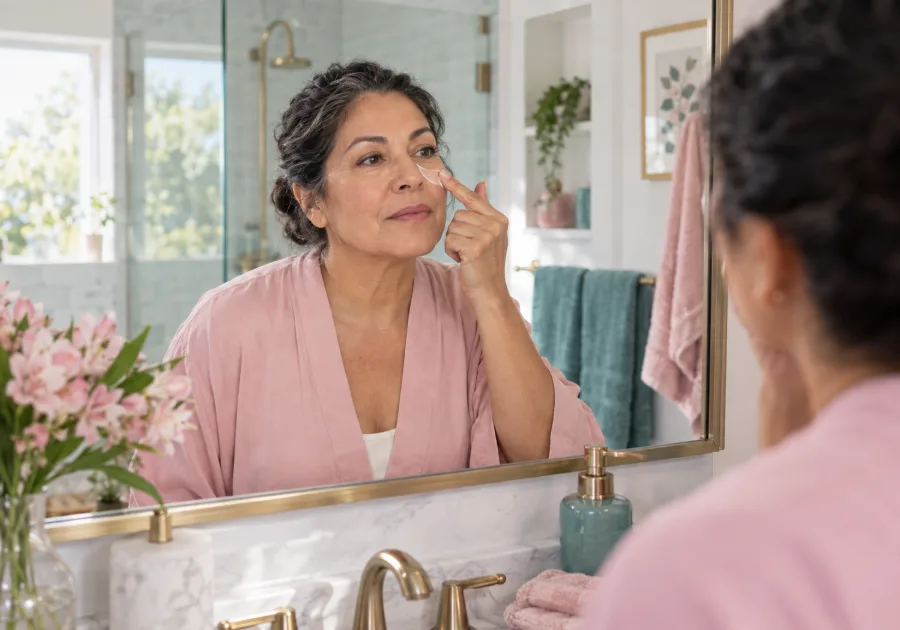
Seborrheic dermatitis causes red or discolored patches with greasy flakes, often beside the nose, in the eyebrows, behind the ears or along the scalp. It can overlap with psoriasis, so a dermatologist may need to tell them apart.1 Our guide to an itchy, flaky scalp covers the scalp side.
Step 1: everyday care
- Zinc soap for washing affected skin is often recommended.1
- Dandruff shampoo works for mild to moderate scalp involvement, and dermatologists may have you lather it on your face or other affected skin too.1 Leave it on as long as directed so the medicine can work.1
- Keep it up once a week after things calm down to help prevent flares, and rotate shampoos if one stops working.1
Our guide to dandruff shampoo ingredients explains the options.
Step 2: prescription creams and foams
Antifungals. Ketoconazole cream, gel or foam is often prescribed; it may sting or irritate.1
Short courses of steroid cream. Added if antifungals or shampoos aren’t enough, or to calm a flare.1 Our article on topical steroid details covers safe use.
Calcineurin inhibitors. Pimecrolimus cream and tacrolimus ointment can be prescribed short term.1
Roflumilast 0.3% foam. A nonsteroid foam approved for seborrheic dermatitis, applied once daily in a thin layer to dry skin.2 It can be used on the nose, eyebrows, ears, eyelid skin and scalp, per the AAD, though the label says not to put it in the eyes or mouth.12
In two 8-week trials with 683 people, more improved on the foam than on an inactive foam (79.5% vs. 58.0% in one trial, 73.1% vs. 40.8% in the other, by the trials’ success measure).2 The most common side effects were cold symptoms, nausea and headache.2
Label cautions: the foam is flammable, so avoid flames and smoking while applying, and it isn’t for people with moderate to severe liver disease.2
Questions to ask
- Is this seborrheic dermatitis, rosacea or psoriasis? See our rosacea guide.
- What should I use daily, and what only for flares?
- Will my plan cover the newer foam, or should I try older options first?
Try: “I keep getting flaky red patches by my nose and eyebrows. Could this be seborrheic dermatitis, and what’s a good plan for flares and maintenance?”
Skin, Head to Toe includes a short-shelf planner and a 12-week SkinLog. Use them to track which products you use and how the patches respond each week. See the book.
This article is for general educational purposes only and is not medical advice. It isn't a substitute for diagnosis or treatment from a qualified healthcare professional who knows your health history. Please don't use prescription steroid creams on your face for long periods without a clinician's guidance. A rash that spreads quickly, blisters, oozes, or comes with fever, or a sore or spot that doesn't heal, should be checked. If you think you may be having a medical emergency, call 911 or your local emergency number right away. This article discusses clinical guidance and a drug label. Girl Playbook does not endorse any specific product, test, or provider.
Girl Playbook sells this book. It provides education and worksheets, not individualized medical care.
Sources
The research behind this article, in the order it’s cited. How we source our articles.
- American Academy of DermatologySeborrheic dermatitis: Diagnosis and treatment (opens in a new tab)abcdefghi
- DailyMed, National Library of MedicineRoflumilast topical foam 0.3%: prescribing information (opens in a new tab)abcde
Spotted something out of date? Tell us and we’ll check it.


