Should You Work Out Differently on Your Period?What 78 Studies Found
PeriodsArticleCycle-syncing plans tell you to lift heavy in one phase and rest on your period. A 2020 review of 78 studies found performance dipped only trivially in the days around a period, too little to justify general rules. Symptoms are another story: in a survey of 6,812 women who exercise, frequent cramps, fatigue and mood changes went with more missed workouts. Here is how to find your own pattern.
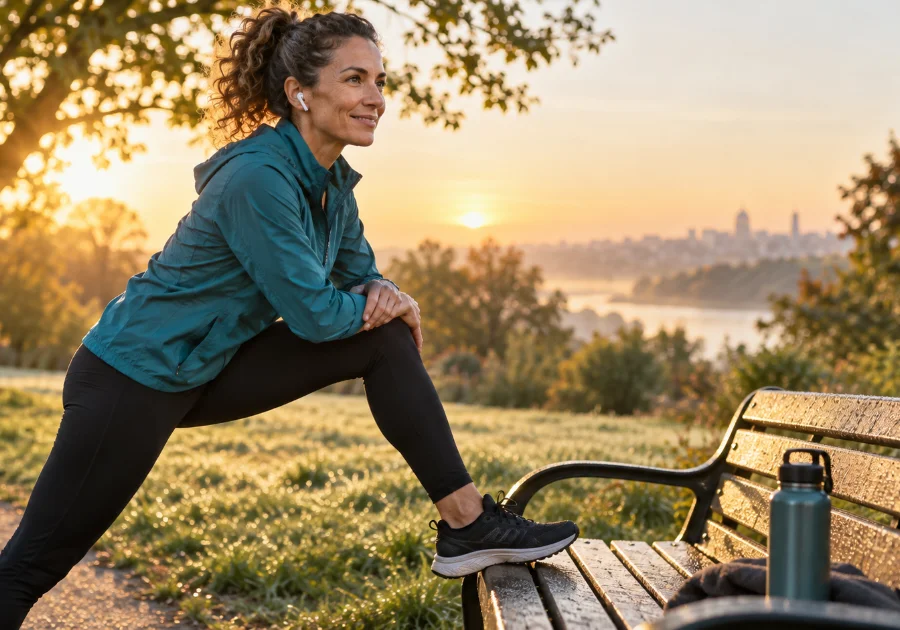
Cycle-syncing apps and plans promise better workouts if you match training to your cycle. Researchers have tested the idea that performance changes across the month.
What 78 studies found
A 2020 review pooled 78 studies of women with regular cycles, mostly lab tests of strength and endurance at different points in the cycle.1
- Performance might dip slightly in the early part of the cycle, which starts with your period, compared with other phases.1
- The authors called the effect trivial, and the evidence quality low.1
- Their conclusion: the results can’t support general rules for training by phase; watch your own response instead.1
The review covered only women with regular cycles, not perimenopause or hormonal contraception, and it measured performance in lab tests, not a season of training.1
Symptoms matter more than the calendar
A survey of 6,812 women who exercise, recruited through the Strava app, average age 38, asked about cycle symptoms:2
| Symptom | Share reporting it |
|---|---|
| Mood changes or anxiety | 90.6%2 |
| Tiredness | 86.2%2 |
| Stomach cramps | 84.2%2 |
| Breast pain or tenderness | 83.1%2 |
Women with more frequent symptoms were more likely to miss or change training, miss competitions and miss work or school.2 Several authors worked for a company that sells a cycle-tracking app for athletes, and the women chose to answer.2
So both are true: the average lab dip is trivial, and a bad cramp day can still change your workout.12
Find your own pattern
- For two cycles, jot each workout next to your period notes: what you did, and a word on how it felt.
- Mark symptom days, not just period days: cramps, heavy flow, poor sleep, low mood.
- Compare. You may find one hard day a month, or that the week you skip holds only one bad day.
If cramps are what stop you, regular exercise across the month has trial support: see does exercise help period cramps? If heavy bleeding is the problem, see how to know if your period is too heavy. Periods that stop while you train hard or eat less need a clinician’s look.
Try: “Two days a month my cramps and bleeding make running impossible. I’ve logged two cycles. What can I do about those two days?”
Period, Handled covers this in Chapter 10, “Work, Travel, Gym, Bed,” in a section called “Training on Your Period.” Its Period Scorecard sits next to your training notes for two cycles, so your own pattern answers the question the 78 studies couldn’t settle for you. See the book.
This article is for general educational purposes only and is not medical advice. It isn't a substitute for diagnosis or treatment from a qualified healthcare professional who knows your health history. See a clinician if your periods stop while you're training hard or eating less, if bleeding is heavy enough to soak through protection hourly, or if cramps stop your usual activities. Girl Playbook does not endorse any specific product, test, or provider.
Girl Playbook sells this book. It provides education and worksheets, not individualized medical care.
Sources
The research behind this article, in the order it’s cited. How we source our articles.
- Sports Medicine (via PubMed Central), 2020The Effects of Menstrual Cycle Phase on Exercise Performance in Eumenorrheic Women: A Systematic Review and Meta-Analysis (opens in a new tab)abcdef
- British Journal of Sports Medicine (abstract via PubMed), 2021Prevalence and frequency of menstrual cycle symptoms are associated with availability to train and compete: a study of 6812 exercising women recruited using the Strava exercise app (opens in a new tab)abcdefgh
Spotted something out of date? Tell us and we’ll check it.


