Weighted Vests for Bone Health After Menopause: What the Trials Show
Menopause & HormonesArticleWeighted vests are a popular way to "load" bones on daily walks. Trials suggest any benefit comes from exercise done with the vest, not from wearing it around the house, and safety deserves a plan.
In this article
Bone loss speeds up after menopause, and weighted vests have become a popular way to add “load” to walks, chores and workouts. They range from slim vests with a few pounds to bulky ones that hold 20 or more. Here is what recent research shows about whether they protect bone, and how to use one more safely.
Exercise with a vest helped. Wearing one alone didn’t show much.
- A 2026 meta-analysis of nine randomized trials with 368 middle-aged and older adults found that exercising with a vest improved bone density at the hip and spine compared with usual activity. But adding a vest to exercise people were already doing didn’t add a significant bone benefit.1
- A 2026 review of 15 studies in adults 60 and older found that benefits tended to show up when the vest was used during structured, gradually heavier exercise. Simply wearing a light vest during the day generally didn’t produce measurable improvements.2
- During weight loss, a year-long trial called INVEST in Bone Health compared weight loss alone with weight loss plus a weighted vest or resistance training in adults averaging about 67. Neither the vest group nor the resistance training group kept more hip bone density than the weight-loss-only group.3
In short, the exercise seems to matter more than the vest itself.
Safety first
The 2026 review recommends safety screening before starting, beginning with a light load and adding weight slowly. It also noted more recorded falls in one trial.2
Before you buy one:
- Talk with your clinician if you have osteoporosis, a past spine fracture, balance problems, or back, hip or knee pain.
- Start light and increase gradually.
- Choose a snug, even fit that sits close to your body and doesn’t pull your shoulders forward.
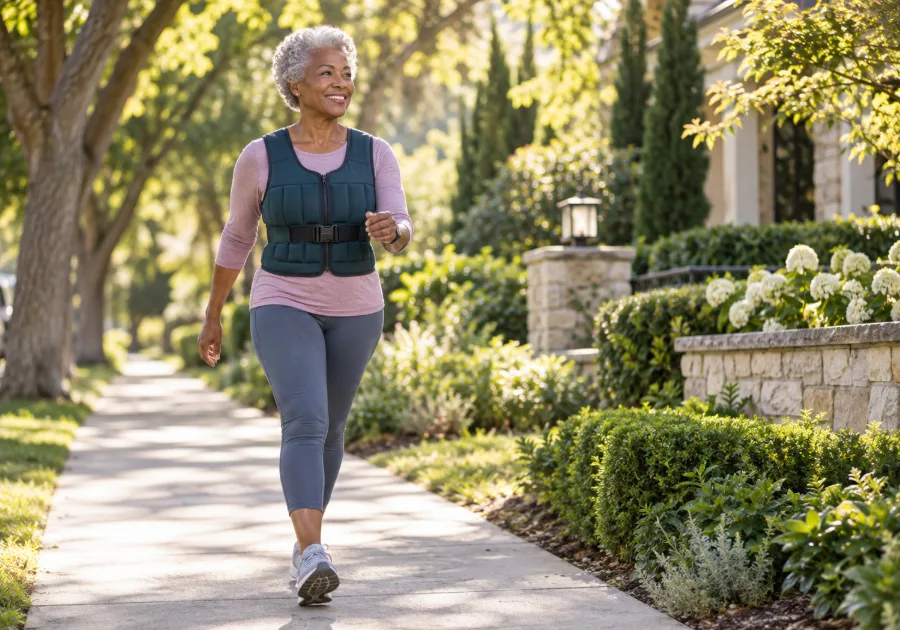
- Use it for planned exercise, such as walking, step-ups or a class, rather than all-day wear.
- Skip it on uneven ground or anywhere a fall is more likely.
The bigger bone picture
Strength and balance training, enough calcium and vitamin D, and screening when it’s recommended all matter. Our guides to bone density scan coverage and calcium and vitamin D supplements cover those steps. If you already have low bone density, ask whether a physical therapist can design a safe loading program for you.
Try: “I’d like to use a weighted vest on my walks to help my bones. Given my bone density and balance, is that safe for me, and what kind of exercise would help most?”
My Body Changed. Now What? includes a Visit Brief. Use it to bring your bone density results, exercise plans and questions to your appointment. See the book.
This article is for general educational purposes only and is not medical advice. It isn't a substitute for diagnosis or treatment from a qualified healthcare professional who knows your health history. Please don't ignore professional advice or delay getting care because of something you read here. If you have osteoporosis, a history of spine fractures, balance problems, or back, hip or knee pain, talk with your clinician before adding weight to your body during exercise. If you think you may be having a medical emergency, call 911 or your local emergency number right away. Girl Playbook does not endorse any specific product, test, or provider.
Girl Playbook sells this book. It provides education and worksheets, not individualized medical care.
Sources
The research behind this article, in the order it’s cited. How we source our articles.
- Osteoporosis International (abstract via PubMed), 2026Effects of weighted vest on bone health and body fat in middle-aged and older adults: a systematic review and meta-analysis (opens in a new tab)↩
- Frontiers in Public Health (full text via PubMed Central), 2026Weighted vest interventions in older adults: a mini-review of implementation, benefits, and limitations (opens in a new tab)ab
- Frontiers in Aging (full text via PubMed Central), 2026Does time spent upright moderate the influence of a weighted vest on change in bone mineral density during weight loss among older adults? A secondary analysis of the INVEST in bone health randomized controlled trial (opens in a new tab)↩
Spotted something out of date? Tell us and we’ll check it.