Why Did My Skin React to a New Product?Contact Dermatitis
SkinArticleHow irritant and allergic reactions differ, the everyday triggers from soap and nickel to fragrance, why finding the cause is the only real fix, what calms the rash, and when swelling means emergency care.
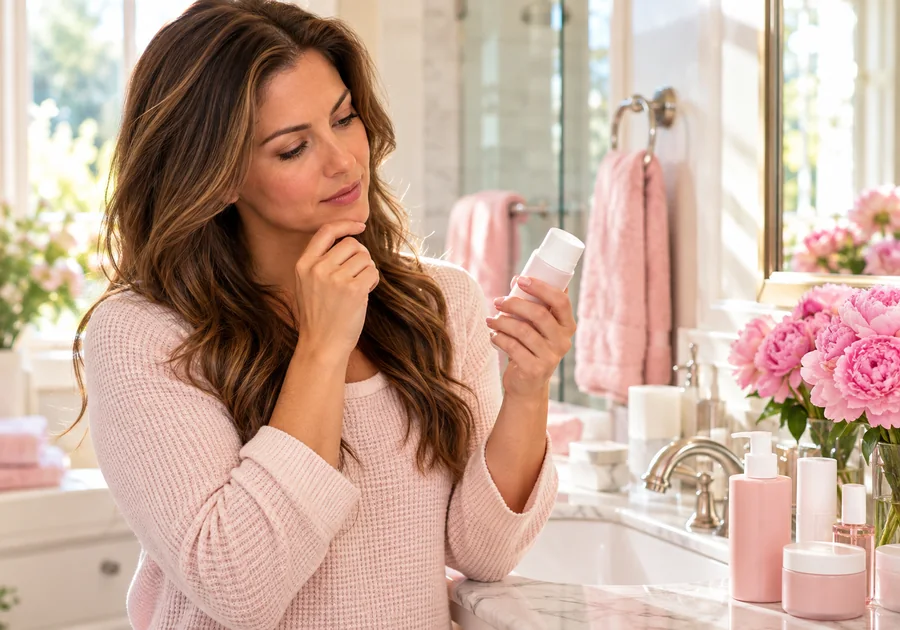
You tried the new serum on Sunday. By Tuesday your cheeks are red, tight and itchy, and by Thursday there are tiny blisters along your jaw. Or it’s your earlobes after a new pair of earrings. Or your hands after a month of washing them eleven times a day.
Two kinds
The NHS1 says irritant contact dermatitis happens when a substance directly damages the outer layer of the skin, and allergic contact dermatitis happens when a substance makes the immune system respond in a way that affects the skin. Cleveland Clinic3 says irritant contact dermatitis occurs more often than allergic.
The AAD2 gives examples: irritant reactions build with repeated exposure, such as frequent handwashing leaving the hands raw. Allergic reactions can follow brief contact and appear hours or days later.
What triggers it
The NHS1 lists soaps and detergents, solvents, frequent contact with water, nickel and other metals, and cosmetics. Cleveland Clinic3 names metals like nickel, fragrances, preservatives and plants such as poison ivy as allergic triggers, and cleaning products, soaps, detergents and solvents as irritants. The AAD2 says more than 15,000 things that touch the skin can cause an allergic reaction, and that fragrance and nickel are especially common. Some reactions need sunlight to develop.
It can look different on different skin. The NHS1 says lighter skin turns red, while darker skin may look dark brown, purple or gray. Cleveland Clinic3 describes red to purple or darker than your natural skin tone, bumpy, with small clusters of pimples or blisters.
If you also get raised welts that come and go, see hives. If your skin is dry and itchy without a new trigger, see dry, itchy skin.
What works
The fix is to find the cause and avoid it. The AAD2 says only by avoiding the cause can you get rid of contact dermatitis. The NHS1 says that if you successfully avoid the irritants or allergens that trigger your symptoms, your skin will eventually clear up.
For the rash itself, the NHS1 lists emollients (moisturizers) and topical corticosteroid creams or ointments to relieve severe symptoms. Cleveland Clinic3 lists over-the-counter anti-itch creams, antihistamines, corticosteroid creams or, in some cases, prednisone. Ask a pharmacist or clinician what suits your skin and where the rash is.
Finding the trigger
Cleveland Clinic3 says your provider may offer testing for allergic cases, including a patch test, to confirm the diagnosis. The AAD2 says a dermatologist can help identify the cause, treat symptoms and help you avoid triggers.
Try this: a skin-contact log
Write down every new thing that touched the area in the two weeks before the rash: skincare, makeup, hair products, laundry detergent, soaps, hand sanitizer, jewelry, gloves, plants.
Note where the rash is.
Pause new products one at a time, if you can. Keep the packages to show your clinician.
When to get checked
Don’t wait if
- Emergency
Get emergency care right away for trouble breathing, or swelling of your lips or mouth.
Cleveland Clinic3 says to contact your provider if the rash doesn’t go away in a week with treatment, or shows signs of infection. The NHS1 says to see a GP if symptoms are persistent, recurrent or severe. The AAD2 says if you have a rash that comes and goes, a board-certified dermatologist can help, and that the longer you have contact dermatitis, the longer it will take to clear.
Book an appointment if any of these fit:
- The rash hasn’t improved after a week
- It keeps coming back, or you can’t tell what’s causing it
- It’s severe, or spreading
- You see signs of infection
- You’d like patch testing
A new product that burns is a clue. Retire it and bring the package.
Swelling of the lips, mouth or face, or trouble breathing with a rash is an emergency. Call 911 or your local emergency number right away.
This article is for general educational purposes only and is not medical advice. It isn't a substitute for diagnosis or treatment from a qualified healthcare professional who knows your health history. Please don't ignore professional advice or delay getting care because of something you read here. If you think you may be having a medical emergency, call 911 or your local emergency number right away. Girl Playbook does not endorse any specific product, test, or provider.
Girl Playbook sells this book. It provides education and worksheets, not individualized medical care.
Sources
The research behind this article, in the order it’s cited. How we source our articles.
- NHSContact dermatitis (opens in a new tab)abcdefg
- American Academy of Dermatology (AAD)Contact dermatitis (opens in a new tab)abcdef
- Cleveland ClinicContact Dermatitis (opens in a new tab)abcdef
Spotted something out of date? Tell us and we’ll check it.


