What Is Eczema in Adults?
SkinArticleWhy a rash that cycles between flares and clear stretches can show up or return in adulthood, what the NHS, AAD and NIAMS list as triggers, how emollients and steroid creams are used, and the signs of infection.
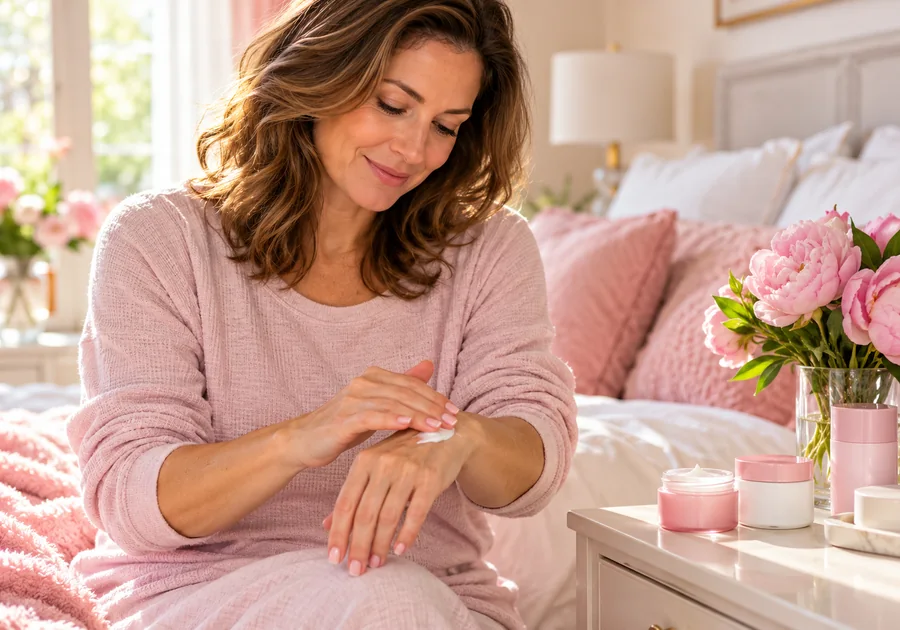
It starts in the creases of your elbows or on the backs of your hands. The skin goes dry and tight, then itches in a way that wakes you up. You scratch until it’s red, or it weeps. A week later it’s calmer. A month later it’s back. You had patches as a kid and thought you’d outgrown them.
What it looks like
The NIAMS2 lists intense itching with red, dry patches, and rashes that may ooze, weep clear fluid or bleed when scratched. It says adults commonly have scaly rashes on the hands and around the eyes. The NHS3 describes itchy skin that can be dry, cracked, crusty, scaly or thickened, commonly on the elbows, knees and hands.
Why it happens
The NIAMS2 says researchers don’t know what causes it, and names three contributors: genetic changes affecting skin proteins, immune system dysfunction, and environmental triggers such as tobacco smoke and fragrances and other compounds in skin products.
The NHS3 lists soap, laundry detergent, pets, some fabrics, pollen, temperature changes, stress, infections and hormonal shifts as triggers. It says it runs in families and links to asthma and hay fever.
The AAD1 notes many adults get raw, cracked, irritated skin that may bleed when they do wet work, with healthcare workers, florists and hairstylists given as examples. If a specific product or metal seems to set it off, see contact dermatitis. For skin that is dry with no clear trigger, see dry, itchy skin, and for raised welts that come and go, hives.
What helps
The NHS3 says there’s currently no cure, but the main treatments are emollients, meaning moisturizing creams, lotions, ointments and gels, and steroid creams, lotions or gels applied to the skin. Its self-care advice is to apply emollients at least twice a day, wash with an emollient instead of soap, avoid triggers, keep cool, keep nails short and avoid scratching.
The AAD1 says treatment can ease symptoms and lead to clearer, if not completely clear, skin, and recommends a mild, fragrance-free cream or ointment. It says early diagnosis and proper treatment can prevent the condition from worsening, and that a board-certified dermatologist can build a plan, especially for people with wet work.
Try this: a flare diary and a two-week routine
Write down each flare: date, where, how itchy from 1 to 10, and what you’d come into contact with in the 48 hours before. Note soap, laundry detergent, new skincare, stress, weather, sleep and illness.
For two weeks, moisturize with a fragrance-free emollient at least twice a day, and wash with an emollient instead of soap.
Take photos in the same light. Bring the diary and photos to your appointment.
When to get checked
Don’t wait if
- Urgent
The NHS3 says to see a GP for persistent symptoms, and to seek urgent care if eczema looks blistered, crusty or leaking fluid, or shows signs of infection such as swelling or warmth. It says these can indicate eczema herpeticum, which needs antibiotics.
Book an appointment if any of these fit:
- A rash itches intensely, or keeps you awake
- It hasn’t improved after two weeks of moisturizing
- It keeps coming back
- It’s on your hands and interferes with work
- You’re not sure whether it’s eczema or a reaction to a product
Get care quickly if the skin is blistered, crusty, weeping, swollen or warm.
Eczema flares and clears. A plan that works on flare days and calm days is what keeps it manageable.
Eczema that's blistered, crusty, weeping or hot and swollen can be infected and needs prompt medical care.
This article is for general educational purposes only and is not medical advice. It isn't a substitute for diagnosis or treatment from a qualified healthcare professional who knows your health history. Please don't ignore professional advice or delay getting care because of something you read here. If you think you may be having a medical emergency, call 911 or your local emergency number right away. Girl Playbook does not endorse any specific product, test, or provider.
Girl Playbook sells this book. It provides education and worksheets, not individualized medical care.
Sources
The research behind this article, in the order it’s cited. How we source our articles.
- American Academy of Dermatology (AAD)Atopic dermatitis in adults (opens in a new tab)abc
- National Institute of Arthritis and Musculoskeletal and Skin Diseases (NIAMS)Atopic Dermatitis (opens in a new tab)abc
- NHSAtopic eczema (opens in a new tab)abcd
Spotted something out of date? Tell us and we’ll check it.


