Why Do I Feel Nauseous After Eating?
Bloating & DigestionArticleThe common causes of queasiness after meals, from reflux and stress to gastritis, gallstones and slow stomach emptying, what eases it, and the symptoms that need prompt care.
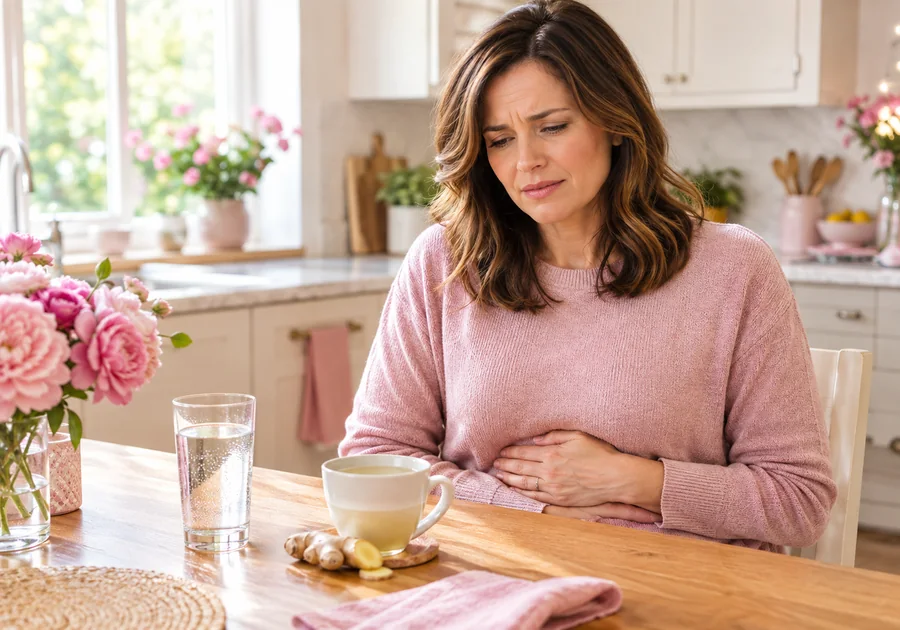
Dinner was good. Twenty minutes later you’re on the couch with your hand on your stomach, wondering whether to lie down or stay upright, and whether the pasta or the wine is to blame. It happened last week too.
What the pattern can point to
Reflux. Acid reflux is on the NHS1 list of causes. See heartburn and GERD.
Stress and anxiety. Also on the NHS1 list. See how stress and anxiety upset your stomach.
Gastritis. Inflammation of the stomach lining is called gastritis, and the National Institute of Diabetes and Digestive and Kidney Diseases (NIDDK)2 says that when it causes symptoms, they include pain or discomfort in the upper abdomen, nausea or vomiting, feeling full early and loss of appetite. Most people with gastritis have no symptoms. The causes the NIDDK lists include H. pylori infection, long-term use of NSAIDs such as ibuprofen, alcohol and bile reflux, autoimmune disease and acute stress from severe illness or injury.
Slow stomach emptying (gastroparesis). The NIDDK3 says symptoms include feeling full soon after starting a meal or long after eating, nausea, vomiting, bloating, belching, upper abdominal pain, heartburn and reduced appetite. Diabetes is the leading identified cause. It can damage the vagus nerve, which controls the stomach muscles. The NIDDK also lists hypothyroidism, autoimmune diseases like scleroderma and neurological conditions, and says doctors often can’t find a cause.
Gallstones. Per the NIDDK4, they typically cause pain in the upper right abdomen that can last several hours, often after heavy meals and in the evening or at night, though most gallstones are silent and cause no symptoms. It says gallstones form when bile has too much cholesterol or bilirubin or not enough bile salts, or when the gallbladder doesn’t empty fully or often enough.
Food intolerance. If gas, bloating and loose stools come with it, see dairy and bloating and IBS.
What helps in the moment
The NHS1 suggests fresh air, sipping cold drinks, ginger or peppermint tea and eating smaller, more frequent meals. It says to avoid strong-smelling foods, hot or greasy meals, eating quickly, large drinks with meals, lying down after eating and tight clothing around the waist.
Try this: a meal-and-nausea log
For two weeks, write down what you ate, when, how fast, how long afterward the nausea started, where you felt it and what eased it.
Note any pain, vomiting or bloating, and your medicines, including ibuprofen and alcohol.
Look for a pattern, such as heavy meals, a specific food, or stress. Bring the log to your appointment.
When to get checked
Don’t wait if
- Urgent
Get care right away in these cases:
The NHS1 says to see a GP if you’re feeling sick and don’t feel better in a few days or it keeps coming back.
Book an appointment if any of these fit:
- Nausea after meals keeps coming back
- You feel full after only a few bites, or stay full for hours
- You have pain in the upper abdomen, especially the upper right
- You’ve lost weight without trying
- You take ibuprofen or similar medicines regularly
- Nausea with chest pain that feels tight or heavy, spreads to the arms, back, neck or jaw, or comes with shortness of breath. The NHS1 says this can mean a heart attack.
- Blood in your vomit. The NIDDK3 lists blood in vomit as a reason to get care right away.
- Black, tarry stools, or red or maroon blood mixed with stool. The NIDDK2 lists tarry stool as a sign of stomach bleeding.
- Belly pain lasting hours with nausea, vomiting, fever, jaundice or unusual urine or stool color. The NIDDK4 lists these with gallstones.
Dinner shouldn’t leave you bracing. A log, a few smaller meals and the right appointment can sort out which cause is yours.
Nausea with chest pain, trouble breathing, vomiting blood, black stools, severe belly pain or fever needs urgent care.
This article is for general educational purposes only and is not medical advice. It isn't a substitute for diagnosis or treatment from a qualified healthcare professional who knows your health history. Please don't ignore professional advice or delay getting care because of something you read here. If you think you may be having a medical emergency, call 911 or your local emergency number right away. Girl Playbook does not endorse any specific product, test, or provider.
Girl Playbook sells this book. It provides education and worksheets, not individualized medical care.
Sources
The research behind this article, in the order it’s cited. How we source our articles.
- NHSFeeling sick (nausea) (opens in a new tab)abcdef
- National Institute of Diabetes and Digestive and Kidney Diseases (NIDDK)Symptoms & Causes of Gastritis (opens in a new tab)ab
- NIDDKSymptoms & Causes of Gastroparesis (opens in a new tab)ab
- NIDDKSymptoms & Causes of Gallstones (opens in a new tab)ab
Spotted something out of date? Tell us and we’ll check it.


