Hair Breaking Off, Not Falling Out?Habits Dermatologists Say to Change
HairArticleShort, snapped strands, frizz and a thinner look can come from breakage rather than true hair loss. Dermatologists list common habits that damage hair, from rubbing in shampoo and wet brushing to tight ponytails and stacked color services. Here is what to change before you buy another product.
In this article
If you’re finding short broken pieces on your shoulders and your ends look frizzy and thin, the problem may be breakage, not hair falling out at the root. Damaged hair is fragile and snaps, and ongoing damage can eventually lead to thinning or bald spots.1 Hair often gets drier after menopause, which can make breakage worse. The American Academy of Dermatology (AAD)1 lists everyday habits to change.1
The checklist
Washing and drying
- Shampoo your scalp, not your lengths. Massage it into the scalp and let the rinse run through the rest.1
- Condition every time you shampoo.1
- Blot, don’t rub. Wrap hair in a towel and let it air-dry when you can.1
Combing and brushing
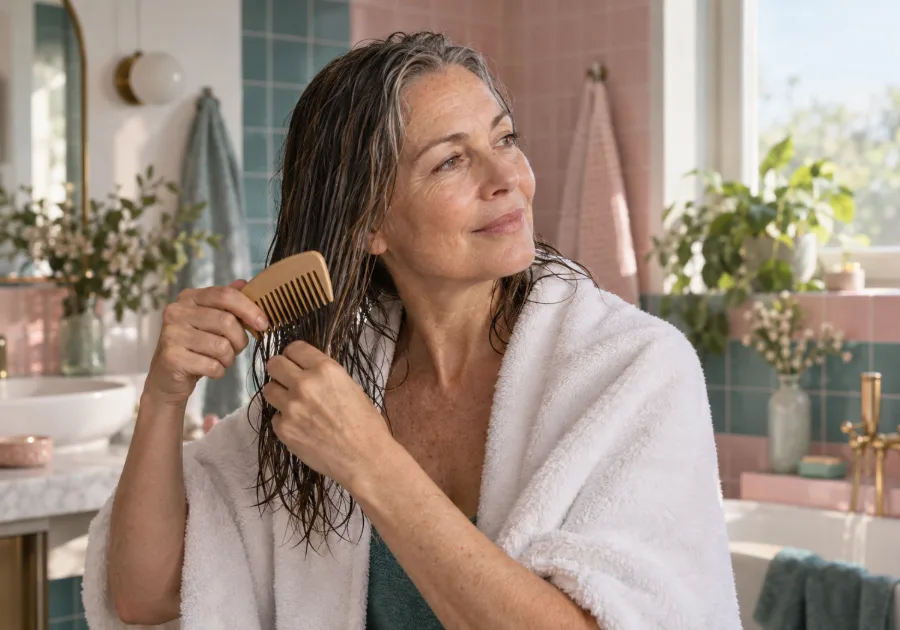
- Straight hair: let it dry a bit, then use a wide-tooth comb. Textured or curly hair: comb while damp with a wide-tooth comb.1
- Skip the 100 strokes. Brush only to style, and work out tangles gently.1
Heat and styling
- Lowest heat setting, less time on each section, and hot tools about once a week or less.1
- Avoid long-hold styling products when you can.1
- Loosen up. Wear ponytails and buns loosely with covered bands.1 Our guide to tight hairstyles and hair loss explains why tension matters.
- Extensions and weaves: keep them light, done by a specialist, and worn for 2 to 3 months at most.1
Color, perms and relaxers
- Space out touch-ups, to 8 to 10 weeks or longer in dry winter months.1
- One chemical service at a time. If you want two, perm or relax first and color 2 weeks later.1
- Protect from sun with a hat or a leave-in conditioner with zinc oxide.1
Swimming
- Cap, rinse right after, then wash and deep condition.1
When it isn’t breakage
If changing your habits doesn’t help, the cause may lie elsewhere, and a dermatologist can check.1 Our guides to why hair thins, heavy shedding, hair dye safety and keratin treatments cover other causes and decisions.
Try: “My hair is snapping off and looks thinner at the ends. Is this breakage from styling, or am I actually losing hair?”
Hair, Everywhere includes a Hair Check and a monthly Hair Log. Use them to record your routine, color dates and changes in breakage. See the book.
This article is for general educational purposes only and is not medical advice. It isn't a substitute for diagnosis or treatment from a qualified healthcare professional who knows your health history. Please don't ignore professional advice or delay getting care because of something you read here. Sudden or patchy hair loss, a scalp rash, pain or scarring should be seen by a dermatologist. If you think you may be having a medical emergency, call 911 or your local emergency number right away. This article discusses general hair care guidance. It does not evaluate any particular brand or product. Girl Playbook does not endorse any specific product, test, or provider.
Girl Playbook sells this book. It provides education and worksheets, not individualized medical care.
Sources
The research behind this article, in the order it’s cited. How we source our articles.
- American Academy of Dermatology10 hair care habits that can damage your hair (opens in a new tab)abcdefghijklmnopq
Spotted something out of date? Tell us and we’ll check it.