Sleeping With a Light or TV On After 60: What One Study Linked It To
Sleep & NighttimeArticleIn a study of 552 adults aged 63 to 84 who wore light-measuring wrist monitors, those exposed to light during the darkest part of the night were more likely to have obesity, diabetes and high blood pressure. It can't show the light caused those conditions, but it's a reason to rethink the TV, hall light or bright night-light, while keeping a safe path to the bathroom.
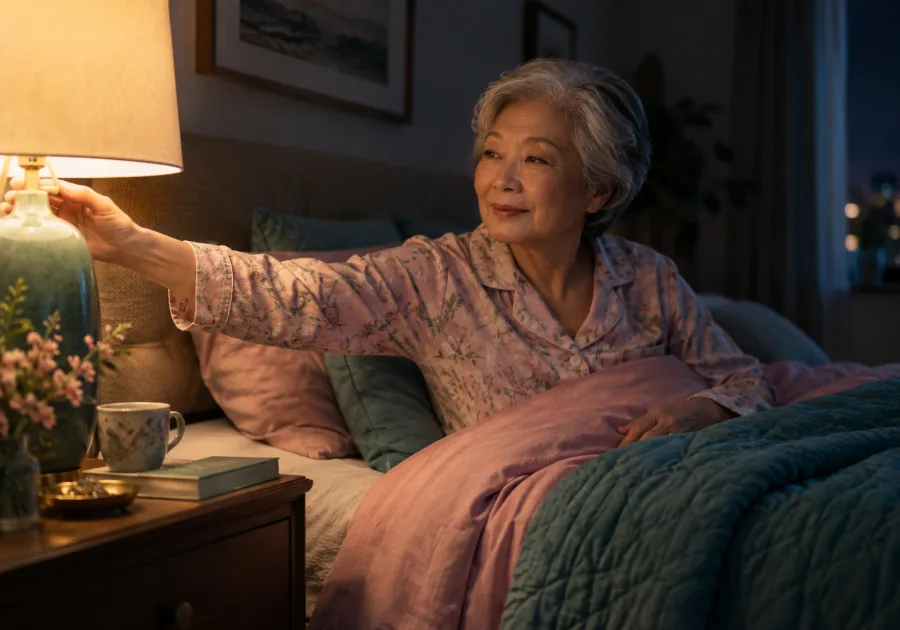
Light at night has been linked to health problems and metabolic risk factors.1 A U.S. study looked at how often older adults are exposed to it and what else goes along with it.
What the study did
552 adults aged 63 to 84 wore a wrist device for a week that tracked both activity and light.1 Researchers checked whether there was any light during the darkest five hours of each person’s night.1
What it found
After accounting for age, sex, race, season and sleep habits, people with light during that darkest stretch were more likely to have:1
| Condition | Odds compared with no light |
|---|---|
| Obesity | About 1.8 times |
| Diabetes | About 2 times |
| High blood pressure | About 1.7 times |
| High cholesterol | No significant link |
They also had more time awake after falling asleep and less regular daily rhythms.1
What it can’t tell you
This study measured everything at the same time, so it can’t show that light causes these conditions.1 People with health problems might sleep differently or leave lights on for other reasons. The authors called for more research on long-term effects.1
Low-cost steps worth trying
- Turn off the TV before sleep, or use a sleep timer.
- Block outside light with curtains or an eye mask if streetlights shine in.
- Keep night-lights dim and low, just enough for a safe walk to the bathroom.
- Don’t trade darkness for safety. If you get up at night, a dim path matters. See waking at night to pee.
Our guides to blue-light glasses, white noise and earplugs and short sleep and dementia risk cover other bedroom changes.
Try: “I fall asleep with the TV on most nights and I have high blood pressure. Is it worth changing, and what’s a safe setup for nighttime bathroom trips?”
Did I Do That in My Sleep1? includes a 14-Night Lights-Out Record and a Visit Brief. Use them to note what’s on in your bedroom at night and how you sleep after changing it. See the book.
This article is for general educational purposes only and is not medical advice. It isn't a substitute for diagnosis or treatment from a qualified healthcare professional who knows your health history. Please don't make your home so dark that getting up at night becomes unsafe; falls are a serious risk for older adults. Chest pain, sudden weakness, or trouble speaking needs emergency care. If you think you may be having a medical emergency, call 911 or your local emergency number right away. This article discusses observational research. Girl Playbook does not endorse any specific product, test, or provider.
Girl Playbook sells this book. It provides education and worksheets, not individualized medical care.
Sources
The research behind this article, in the order it’s cited. How we source our articles.
- Sleep (full text via PubMed Central), 2023Light at night in older age is associated with obesity, diabetes, and hypertension (opens in a new tab)abcdefgh
Spotted something out of date? Tell us and we’ll check it.


