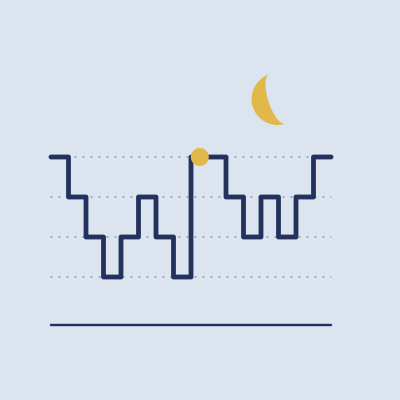
Sound 1
White noise
Brighter, hiss-like
Illustrative energy slope, not a live measurement
Sound energy is spread evenly per frequency interval. Compared with the other examples, higher frequencies are more prominent.
Free shipping
Sleep & Nighttime
Sound comparison studioHear short white, pink and brown noise samples side by side. Compare their sound and frequency balance with a simple player and printable reference.
Explore what these sounds are like while awake. This is a short listening comparison, not a sleep treatment or an overnight sound player. Silence is also a valid preference.
A small listening room
Turn your device volume down before starting. Keep the sound low and stop if it feels uncomfortable. This player cannot measure decibels or certify a safe listening level.
The percentage controls this player only. Your device volume, speakers and headphones determine the actual loudness. Samples may feel different in loudness at the same setting.
Choose a sound below. Nothing plays automatically.
Sound 1
Brighter, hiss-like
Illustrative energy slope, not a live measurement
Sound energy is spread evenly per frequency interval. Compared with the other examples, higher frequencies are more prominent.
Sound 2
Less bright, fuller
Illustrative energy slope, not a live measurement
Energy per frequency interval falls as frequency increases. Lower frequencies have more weight than in white noise.
Sound 3
Deeper, rumble-like
Illustrative energy slope, not a live measurement
Energy falls more steeply with increasing frequency. Low frequencies have more weight than in pink noise.
The sound is only part of the story
The samples illustrate different frequency balances. They are digitally generated, band-limited sounds. The drawings use a logarithmic frequency scale; their vertical positions are schematic, not loudness readings. Small speakers may reproduce little of the deepest sound.
Finding a sound pleasant does not show that it improves sleep. A 2026 Penn Medicine sleep-lab study found reduced REM sleep during pink-noise exposure in its test conditions. It does not settle every listening situation, but it is a reason to question blanket sleep-benefit claims.
For sleep, NHLBI recommends a quiet, cool, dark bedroom. Persistent sleep difficulties deserve a conversation with a healthcare professional. This tool does not choose a treatment, mask a medical symptom or test your hearing.
Only one sample plays at a time. Playback stops when this page goes into the background and does not restart by itself. No microphone or audio upload is used.
Make the most of this tool
Lower your device volume first, choose a short sample length, and press Listen on one sound. Adjust the player level gently or stop at any time. Compare the written frequency explanations and print them as a reference.
This comparison does not select a best sound or promise a sleep benefit. Liking a sound is different from improving sleep. Research remains limited, and a recent sleep-lab study found reduced REM sleep with pink noise in its test conditions.
No. The percentage is a digital player setting, not a decibel measurement. Actual loudness depends on your device volume and output equipment. Keep the sound low, limit listening, and stop if uncomfortable.
Research checked October 8, 2026. Original digital samples and illustrative frequency drawings; no calibrated sound-pressure measurements.